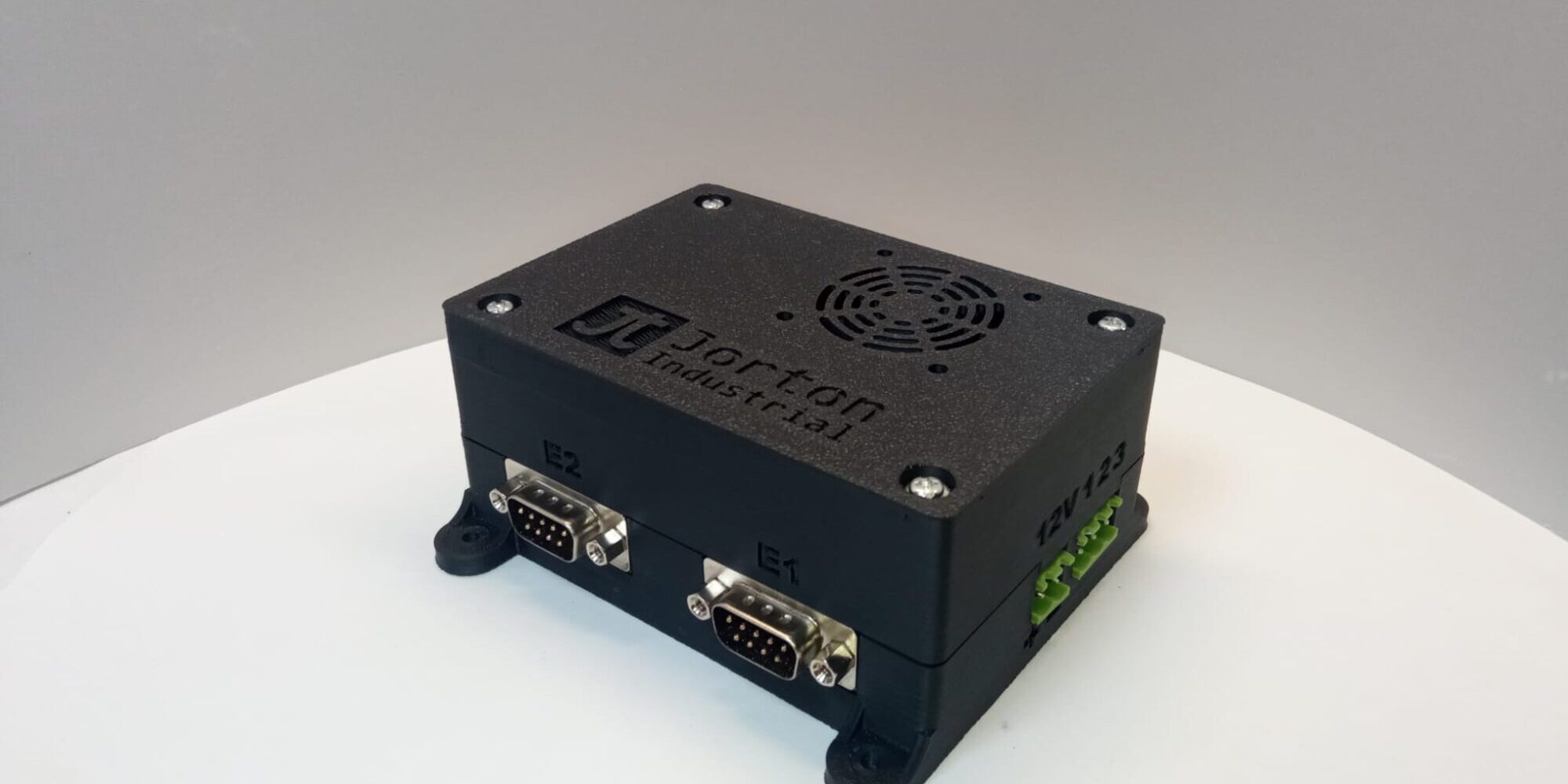
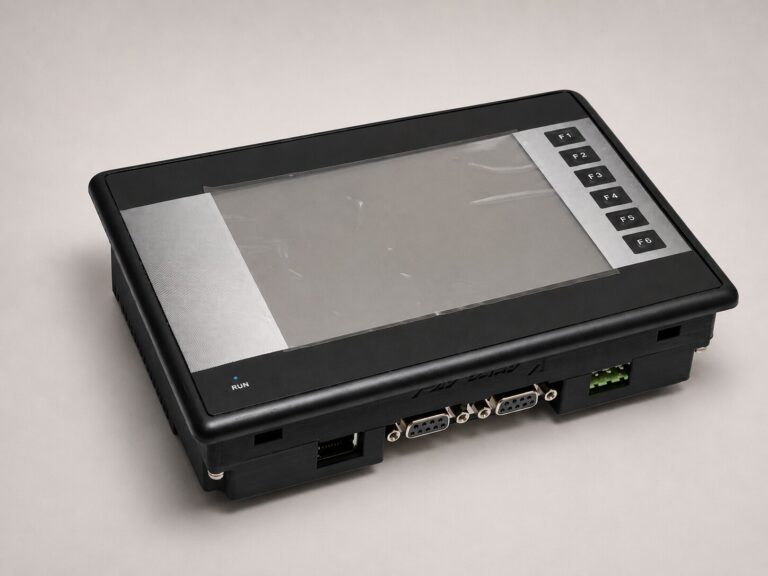
Enclosure compatible with Omron NQ5-TQ010-B
The panel goes back on the machine complete, with a new enclosure, touch panel and front, without changing model or touching the rest of the installation.

Housing electronics or mechanisms in a case made to measure: openings aligned with the real connectors, integrated fixings and access for maintenance without dismantling the whole assembly.
Most often the enclosure already existed and has broken. The unit works perfectly, but its case is cracked and the original replacement isn't sold separately, or costs more than the equipment itself. Reproducing it to measure is worth it, and while we are at it the point where the original failed can be reinforced.
The other case is the opposite: an electronic assembly that never had a case, or one for which none of the ready-made boxes fits without drilling where it shouldn't be drilled, without leaving everything rattling around inside, or without covering exactly the connector that has to be plugged in every day.
In both, the case is made the other way round from a bought one. First the unit that goes inside and its actual connectors are measured; then the enclosure is designed around those dimensions. That is why it fits first time and nothing has to be adjusted during assembly.
The enclosure manufactured and ready to assemble, with the openings resolved in the design rather than drilled afterwards, and the fixings forming part of the piece itself: threaded inserts to secure the electronics from inside, countersunk seats for wall mounting, or whatever fit is called for.
When the assembly has to be able to open, it is resolved in two parts with a guided fit, so that it always closes the same way. And if a button still has to be pressed or indicators read without opening it, that is designed in as well: an external actuator over the physical button, a translucent channel in front of the LEDs.
It is the decision that weighs most on the result, ahead of the machine. A well-designed case in the wrong material warps in the heat or turns brittle within a few months.
PETG for most of those that will really be working: it withstands heat and humidity, and takes a knock without cracking. ASA where there is weather, direct sun or equipment running continuously, which also tends to call for a ventilation grille in the design itself. PLA when the case goes indoors and nothing punishes it: it is the most dimensionally stable and gives the best finish if it is going to be sanded or painted afterwards.
And several can coexist in the same enclosure. PVB where the light from indicators should come out diffused and without the striping of the layers, and TPU for a gasket, a stop or any part that has to cushion.
Tell us what you have in hand and we’ll tell you whether it is feasible, how we would solve it and how long it would take.
The panel goes back on the machine complete, with a new enclosure, touch panel and front, without changing model or touching the rest of the installation.
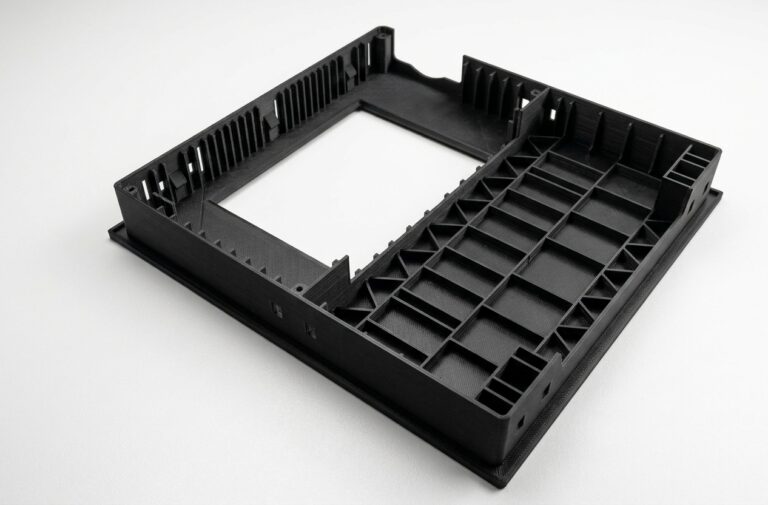
The panel goes back together with its front, with the screen and the keypad in place.
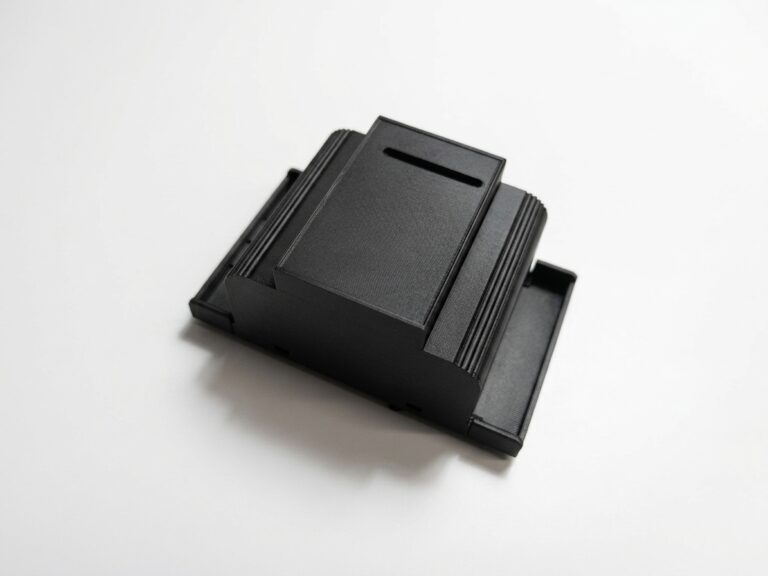
Several modules go back on their rail with a complete enclosure and a firm fixing.
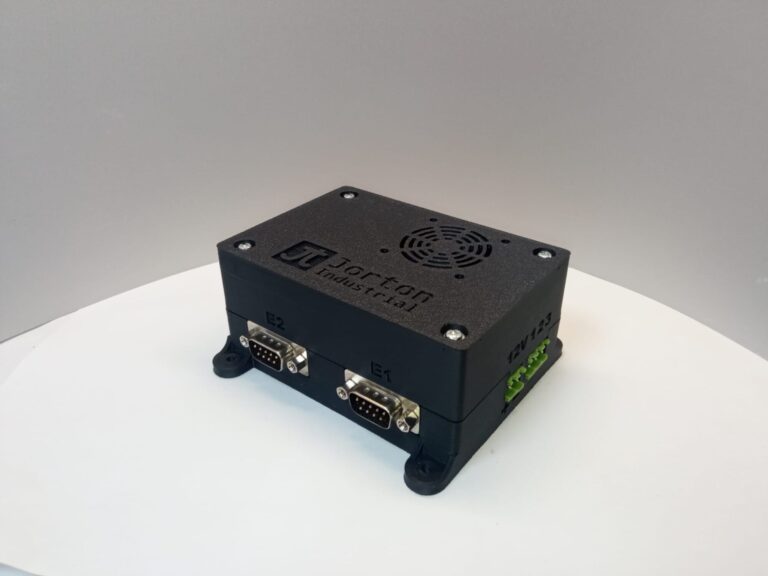
The electronics are protected and ventilated for continuous work, with the connectors accessible.
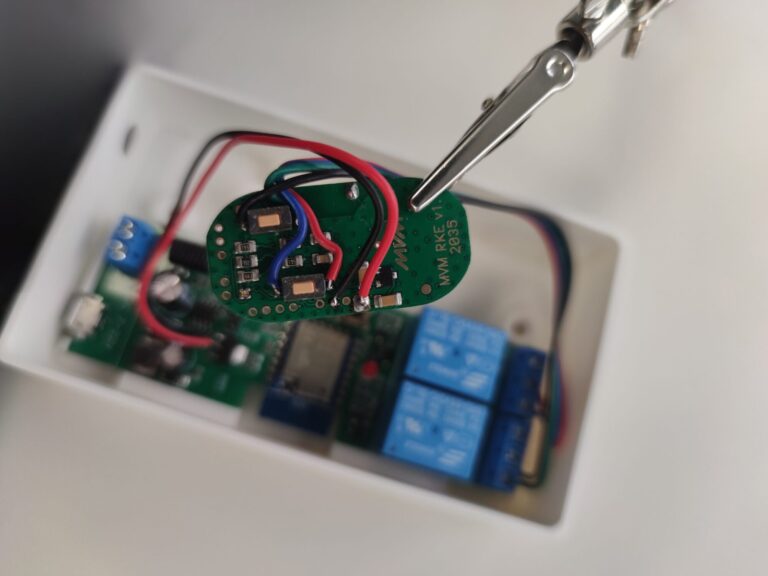
A lock left without manufacturer support is now managed remotely, reusing its original electronics.
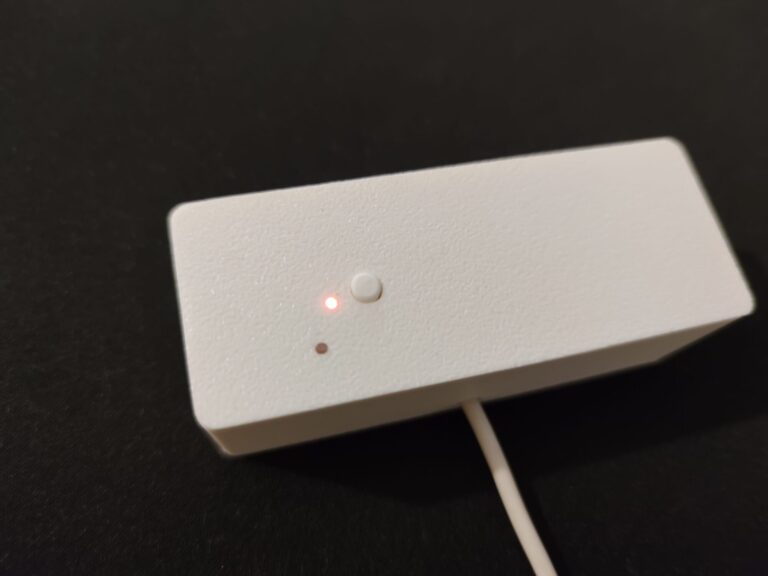
A module ready to fit on the wall, with access to the button and a reading of the LEDs without opening the enclosure.
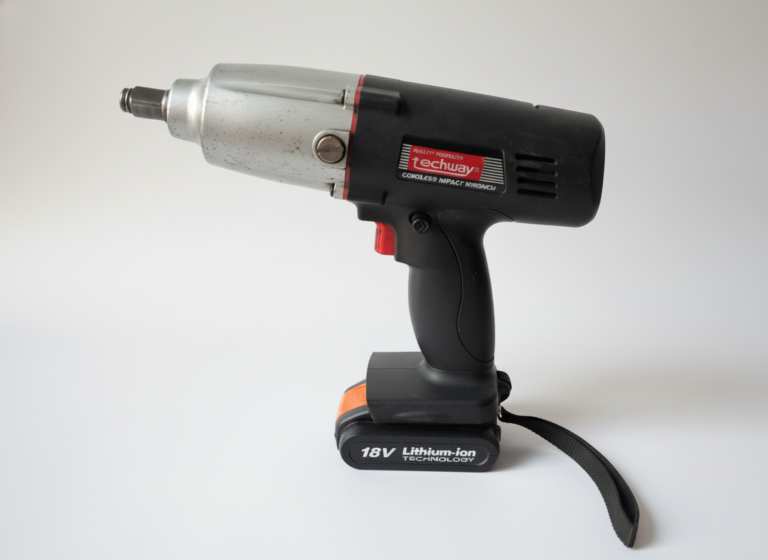
The tool now runs on Worx and Dexter batteries, making use of the ones already in service.
Any of the three is enough to start. We will tell you whether it is feasible, which material it should be made in and how long it would take. A quote commits you to nothing.