Print on demand
Manufacturing from the file you already have, with no design to commission. Whatever the part, what makes the difference is the material and the orientation it is printed in: that is where we apply judgement.
Sometimes the design is already done. You have the file —you bought it, someone sent it to you, or you modelled it yourself— and what you need is for someone to print it properly.
That is a job too, and not a minor one. The same file can come off the machine as a solid part or as one that breaks under the first load, and the difference isn't in the model: it is in the material and in how the part is positioned to print it.
That is where we apply judgement
Orientation decides where the part will break, because what separates first is not the material but the bond between layers. A part that will take a load has to be printed with the layers crossing that load, not following it. It is a decision taken before printing starts and one that cannot be corrected afterwards.
And the material is chosen for where the part is going to live, not for how convenient it is to print. A shelf ornament and a bracket that will sit in the sun do not withstand the same thing, even if the file is identical.
What we need
- The file. Usual formats: STL, STEP, 3MF and OBJ.
- What it is for and where it will be: indoors, outdoors, in contact with heat, under mechanical load.
- How many units.
- If any dimension has to be exact, say so: that is what decides the tolerances it is printed to.
If the file has a problem area, we tell you beforehand
A wall that is too thin, an overhang that won't hold, a dimension that won't come out as drawn. All of that shows when the file is opened, and warning you before printing costs a message; warning you afterwards costs a part.
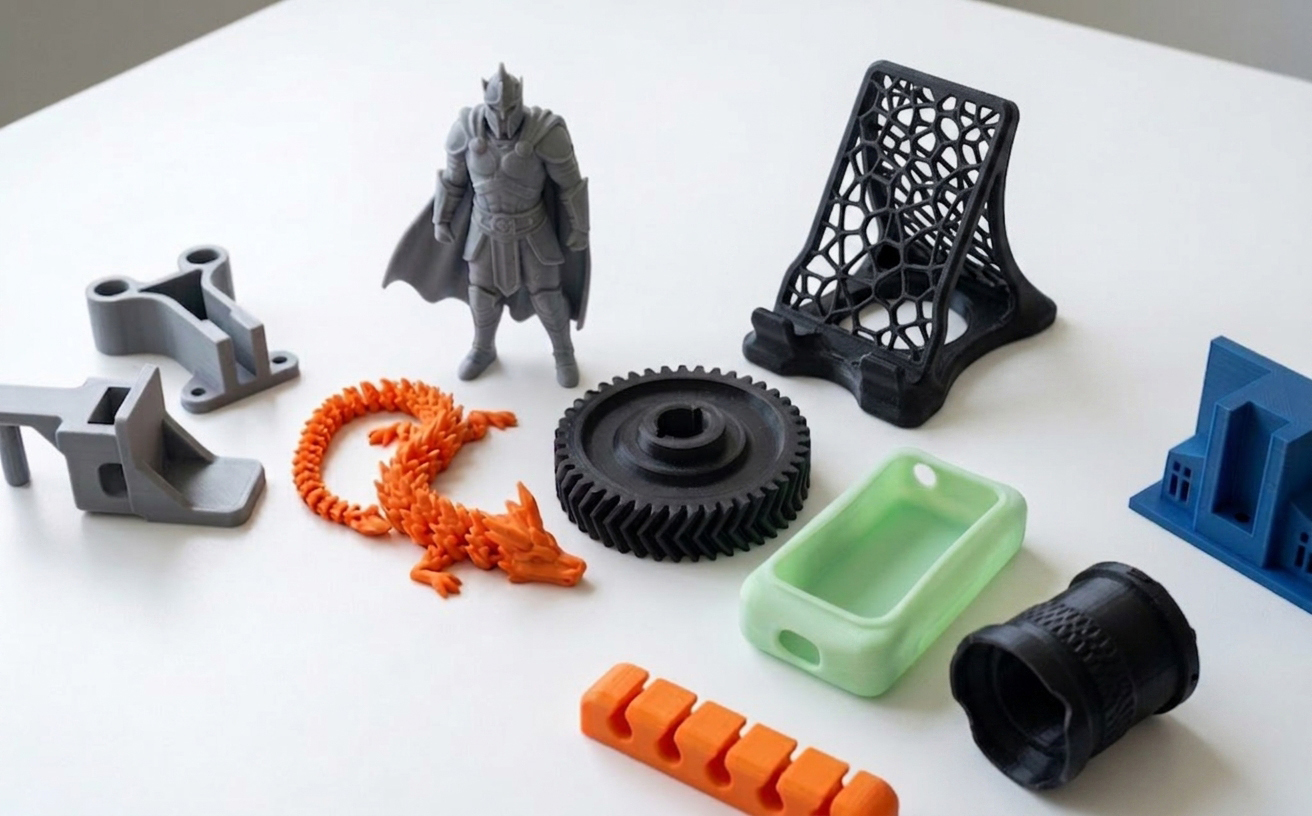
It applies to anything: a technical part, a spare you already have modelled, or a figurine. The job doesn't have to come from a company.
Is this what you need?
Tell us what you have in hand and we’ll tell you whether it is feasible, how we would solve it and how long it would take.
A drawing, a photo or the broken part
Any of the three is enough to start. We will tell you whether it is feasible, which material it should be made in and how long it would take. A quote commits you to nothing.