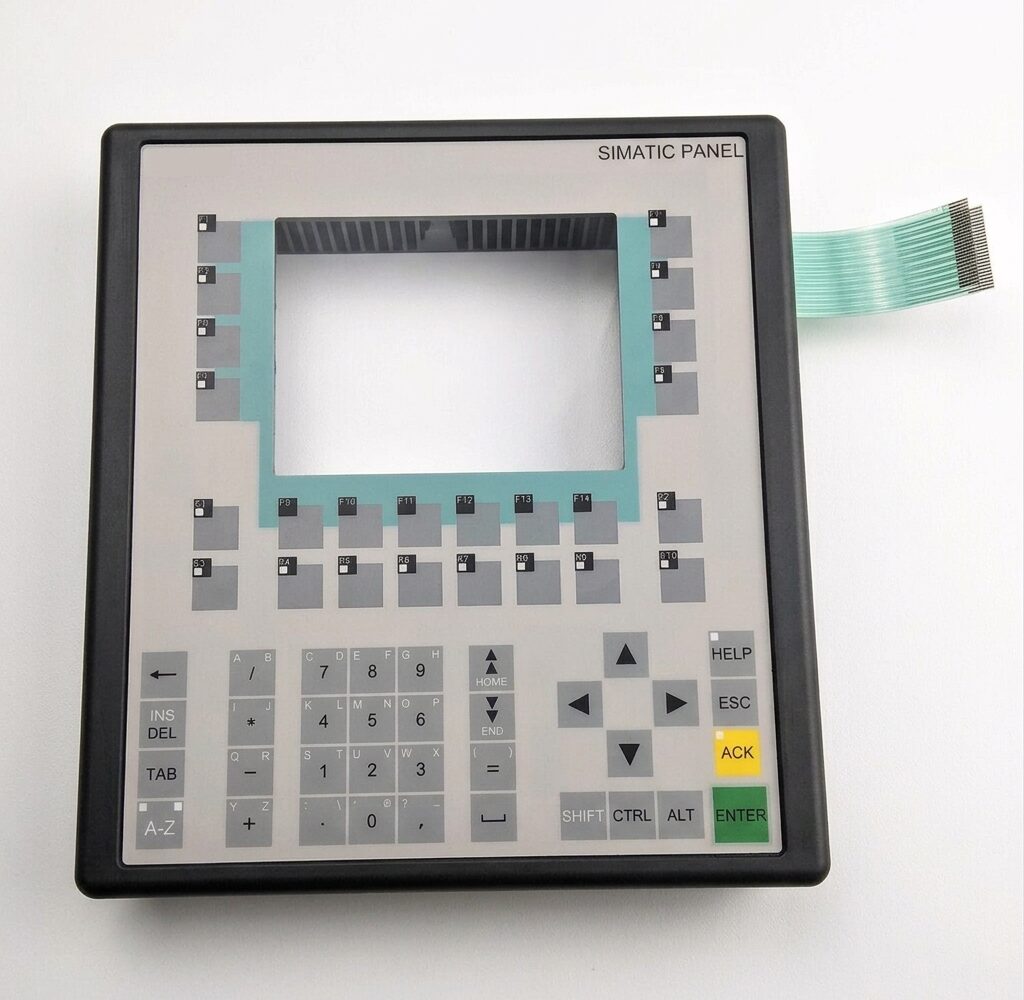
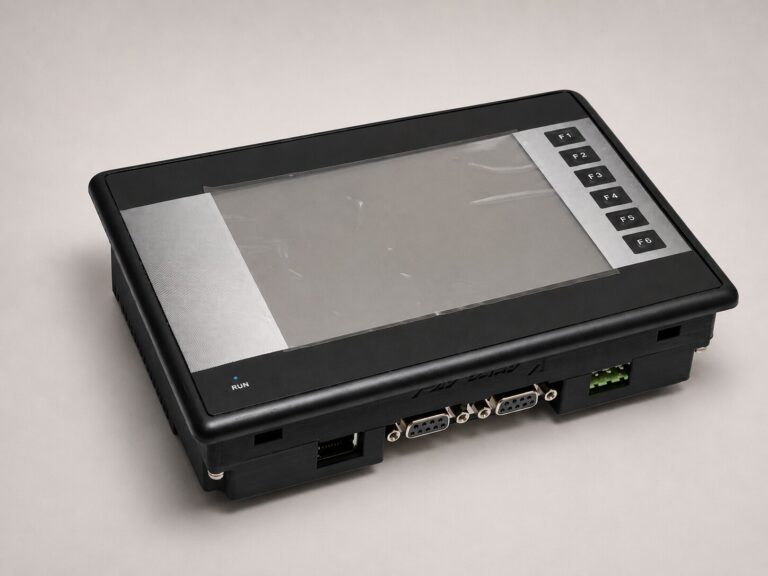
Enclosure compatible with Omron NQ5-TQ010-B
The panel goes back on the machine complete, with a new enclosure, touch panel and front, without changing model or touching the rest of the installation.

Finding the reference that fits —original or compatible—, sourcing it and delivering it tested. To replace one that has broken, or to equip a new build.
The screen, the touch panel and the overlay are not made in the workshop: they are bought. What is done here is to find the right reference —original or compatible—, handle the purchase and deliver it tested, on its own or already fitted into the assembly.
There are two different routes to this.
A unit with a cracked screen, a touch panel that no longer responds properly, a front panel worn out by use. The equipment is still good and what has failed is a part that can be replaced.
The hard part is almost never fitting it: it is finding the reference that matches, especially when the manufacturer no longer supplies it separately or the model is a few years old. That is where the work lies, and that is also where the compatible alternative comes from when the original has ceased to exist.
The opposite case: something being built that needs a screen. Here the three parts have to match one another —the screen, the front panel that frames it and the case where it is all mounted— and when each one comes from a different place, the fit between them ends up being nobody's responsibility. Hence the usual problems: the cut-out that doesn't match the visible area, buttons misaligned with what is printed above them.
Either way, one point of contact instead of three, and the parts checked before they arrive. And if the enclosure comes from here too, one party responsible for everything fitting together — which is exactly the part left ownerless when each item is ordered separately.
Tell us what you have in hand and we’ll tell you whether it is feasible, how we would solve it and how long it would take.
Any of the three is enough to start. We will tell you whether it is feasible, which material it should be made in and how long it would take. A quote commits you to nothing.