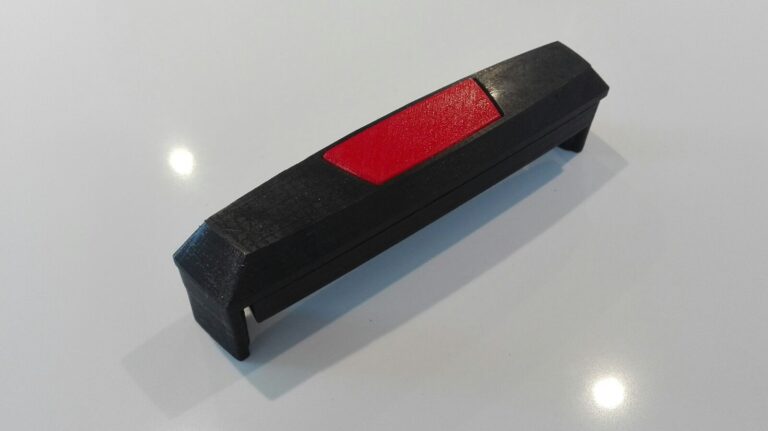
Suitcase handle
The mechanism reproduced in full, button included, and compatible with the original screws.

Discontinued parts, parts with no replacement available, or parts never made in series. They are reproduced by reverse engineering from the original, even if it arrives broken, and made in a material that stands up to real use.
A plastic part breaks and the whole appliance stops being of any use. You call the manufacturer and it turns out the model is no longer made, or the spare isn't sold separately, or it never existed at all because that part is fitted at the factory. And the rest of the equipment is perfectly fine.
That is what is solved here: reproducing the part from the original —even if it arrives in pieces— and making it in a material that withstands what the old one withstood. Without modifying the appliance, without drilling anything new and without workarounds you can feel when you use it.
A cracked part keeps almost all the information needed: the dimensions, the fits, the bearing points. It is measured across the fragments and the complete geometry is rebuilt in CAD.
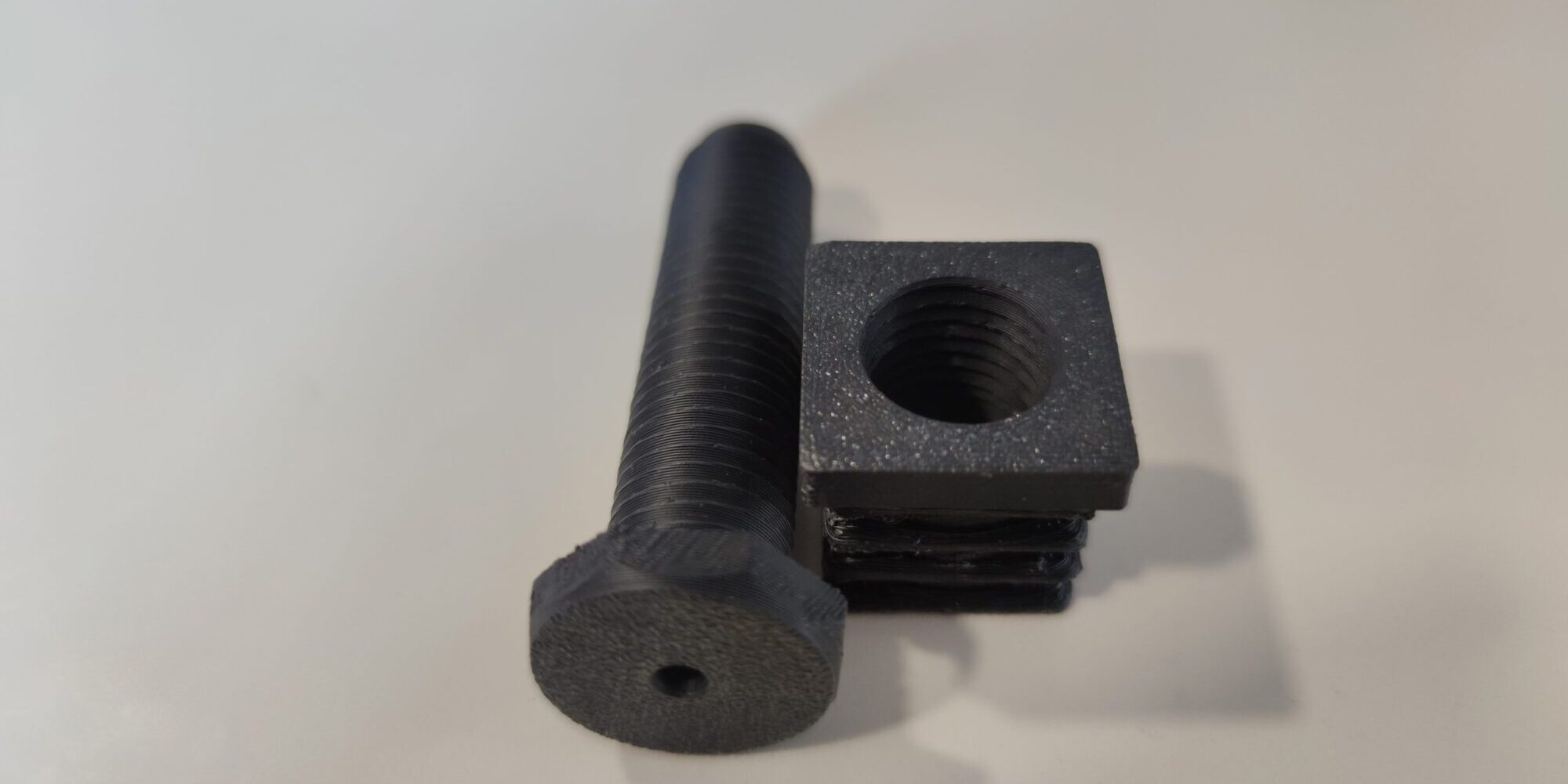
And it is rebuilt in full, not just on the outside. Very often what makes a part work is inside it: a seat that lets something turn freely, a thread that has to go in snugly, a fit that works in two directions at once. Copying the outline gives you a part that looks like the right one, goes into place and doesn't do its job.
It is what decides whether the spare lasts years or a few months.
PETG for most of those that will really be working: it withstands heat and humidity far better than PLA and takes a knock without cracking. ASA when the part goes in the sun or outdoors, because it resists radiation without yellowing or turning brittle over the years, which is exactly how outdoor plastics tend to die. PLA when it goes indoors and nothing punishes it: it is also the most dimensionally stable, which in a spare that has to fit something already there counts for more than you would think.
When the original part was soft —a gasket, a plug, a stop, something that cushions— the replacement is made in TPU, which deforms and returns to shape, and allows how much it gives to be adjusted. And if it has to let light through or stay translucent, in PVB, which diffuses evenly and takes a smoothing with isopropyl alcohol that removes the striping of the layers.
Tell us what you have in hand and we’ll tell you whether it is feasible, how we would solve it and how long it would take.
The mechanism reproduced in full, button included, and compatible with the original screws.
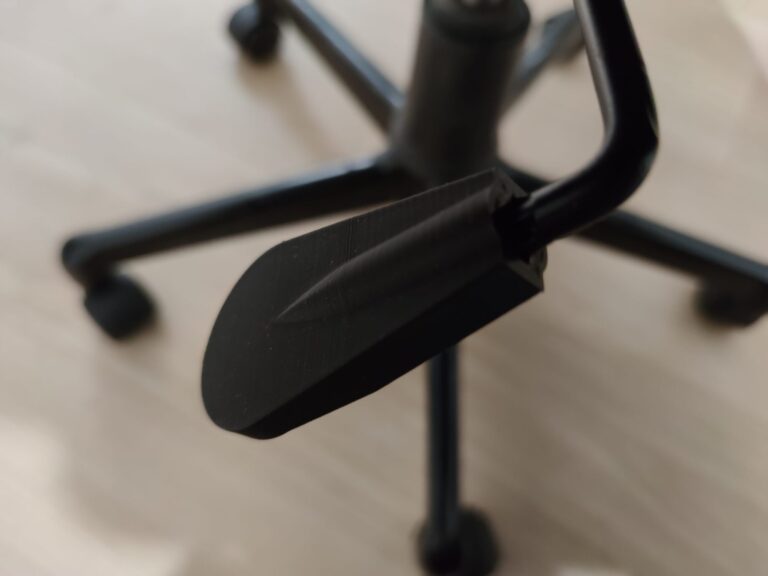
A replacement that restores the action without play and avoids replacing the whole assembly.
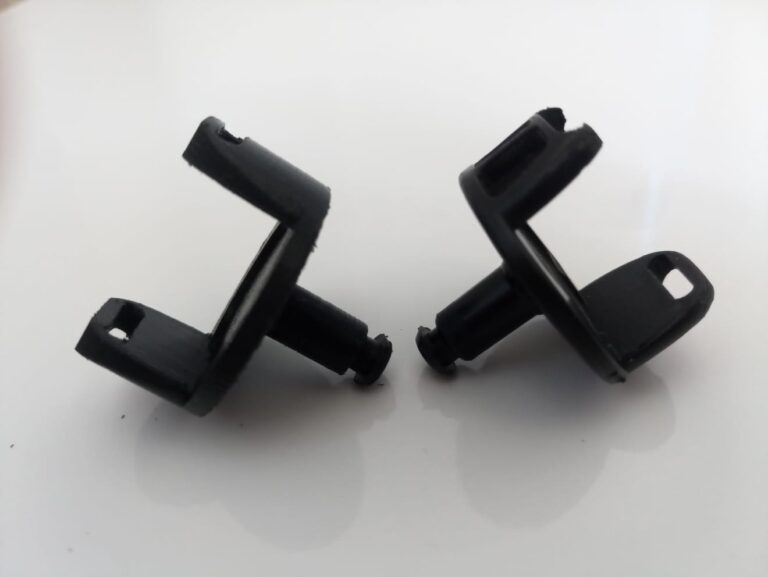
A replica that restores manoeuvrability to the unit without having to replace it.
Any of the three is enough to start. We will tell you whether it is feasible, which material it should be made in and how long it would take. A quote commits you to nothing.