
Electronics and automation · Prototypes and validation
Spawn3D Printer
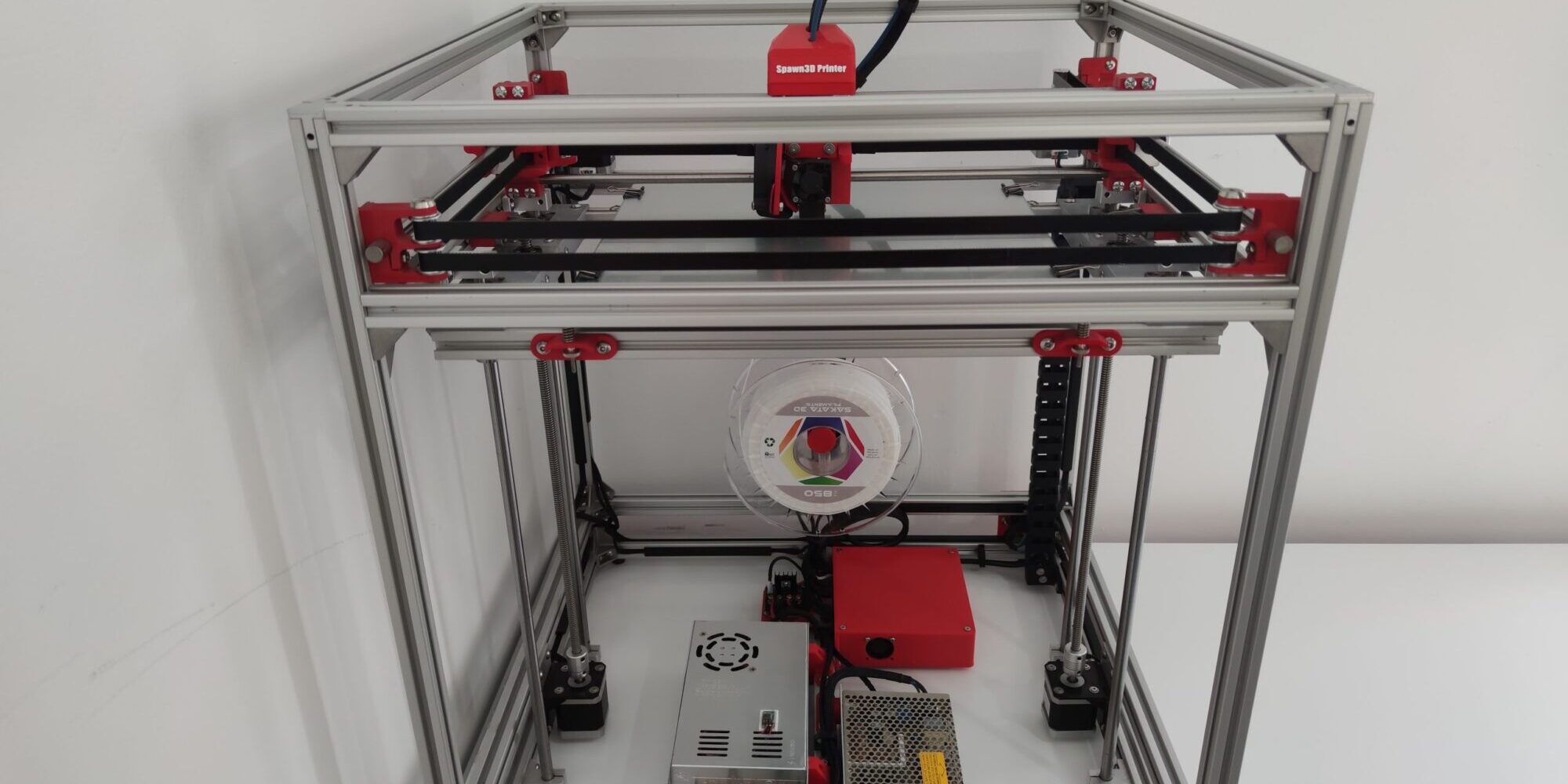
A CoreXY machine designed and integrated from scratch: 320 × 320 × 320 mm of build volume and Duet2 WiFi electronics.
The challenge
Building a 3D printer from scratch with a CoreXY architecture, aiming for precision, reliability and full control of the system instead of inheriting the design decisions of a commercial machine.
The constraints
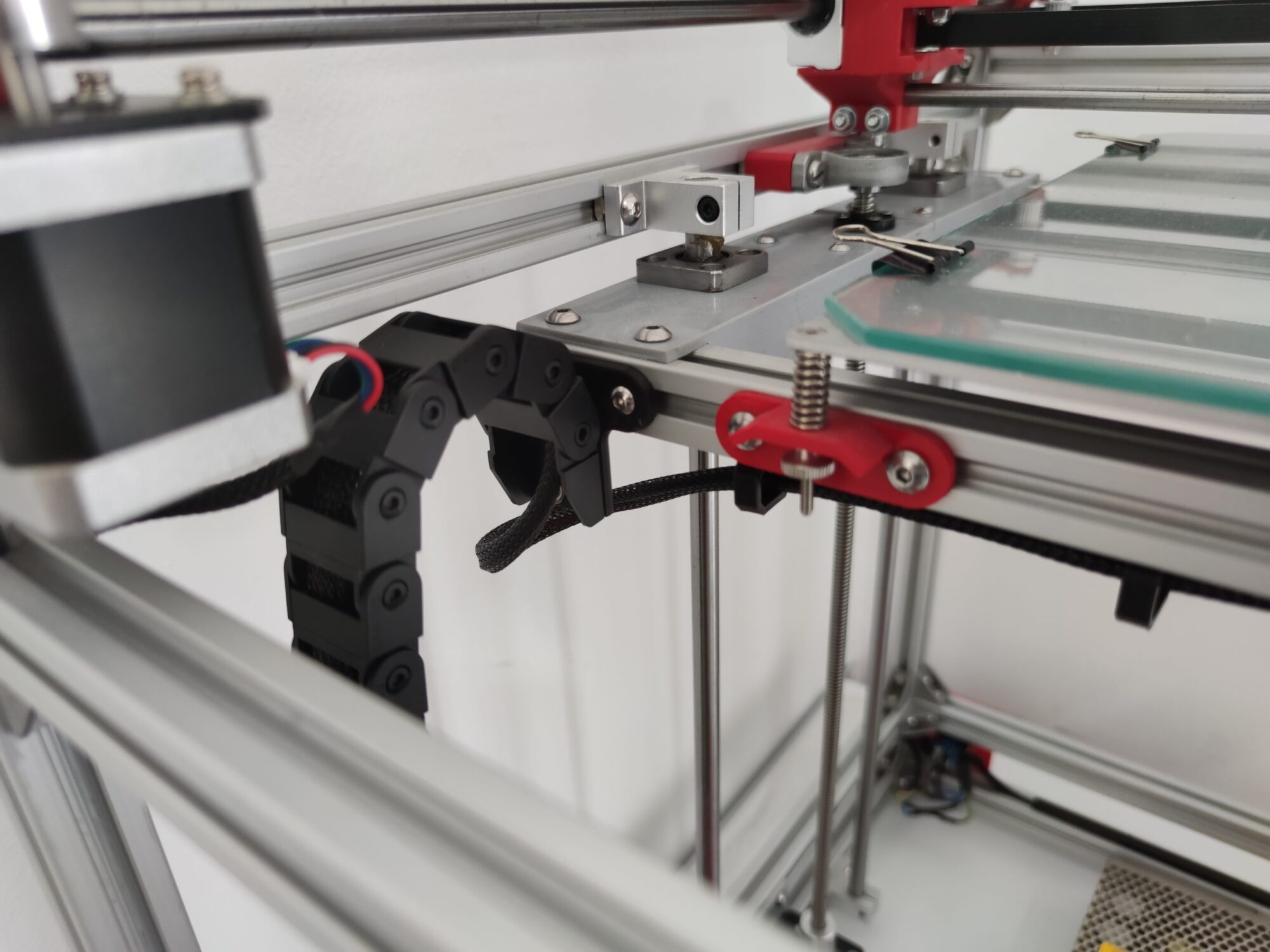
A machine like this cannot be bought part by part. Every structural element has to be designed and printed, the wiring has to be made to measure, and the electronics have to live with power split across two supplies. And above all it had to end up maintainable: if something fails, you have to be able to reach it.
The solution
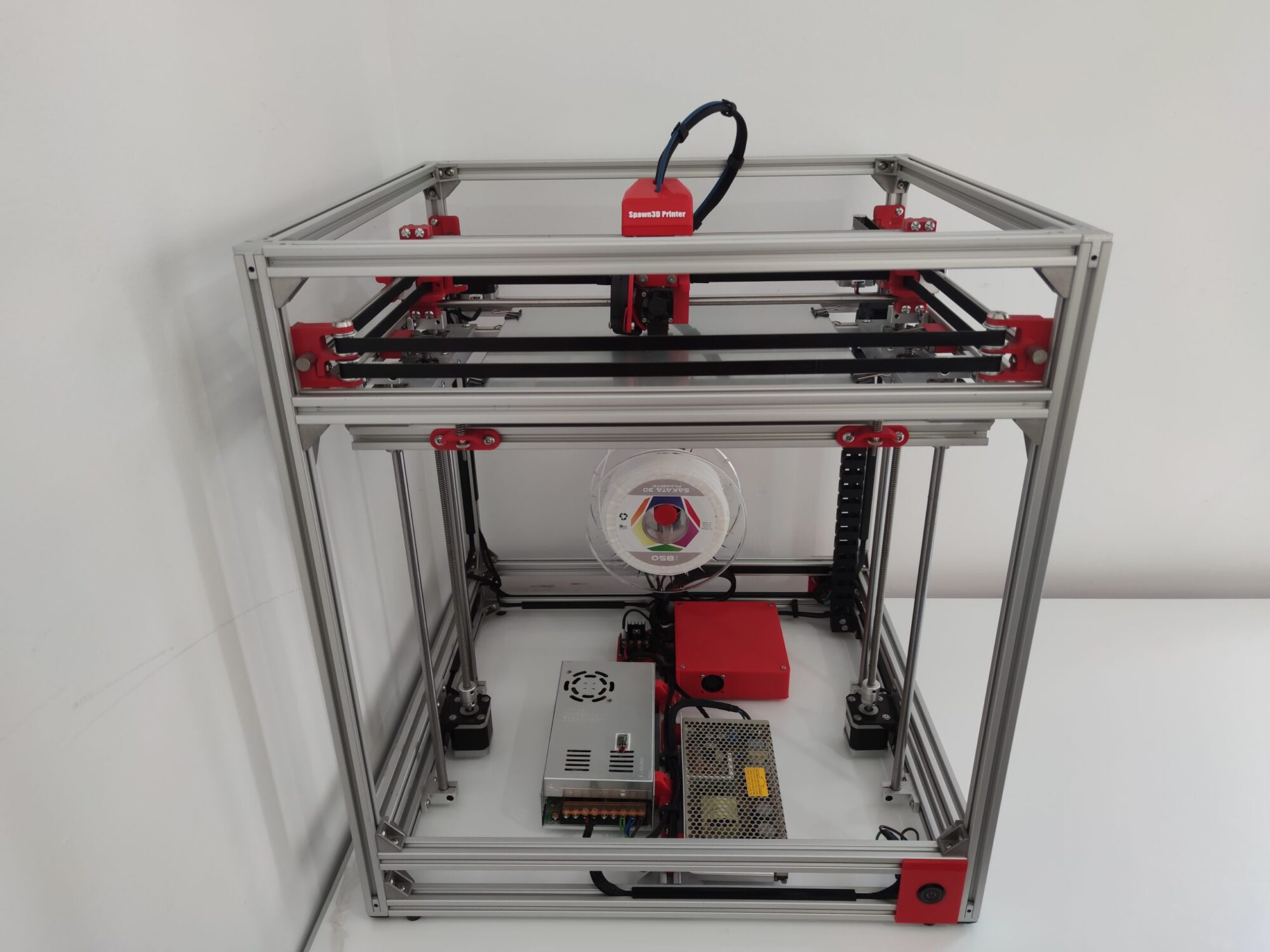
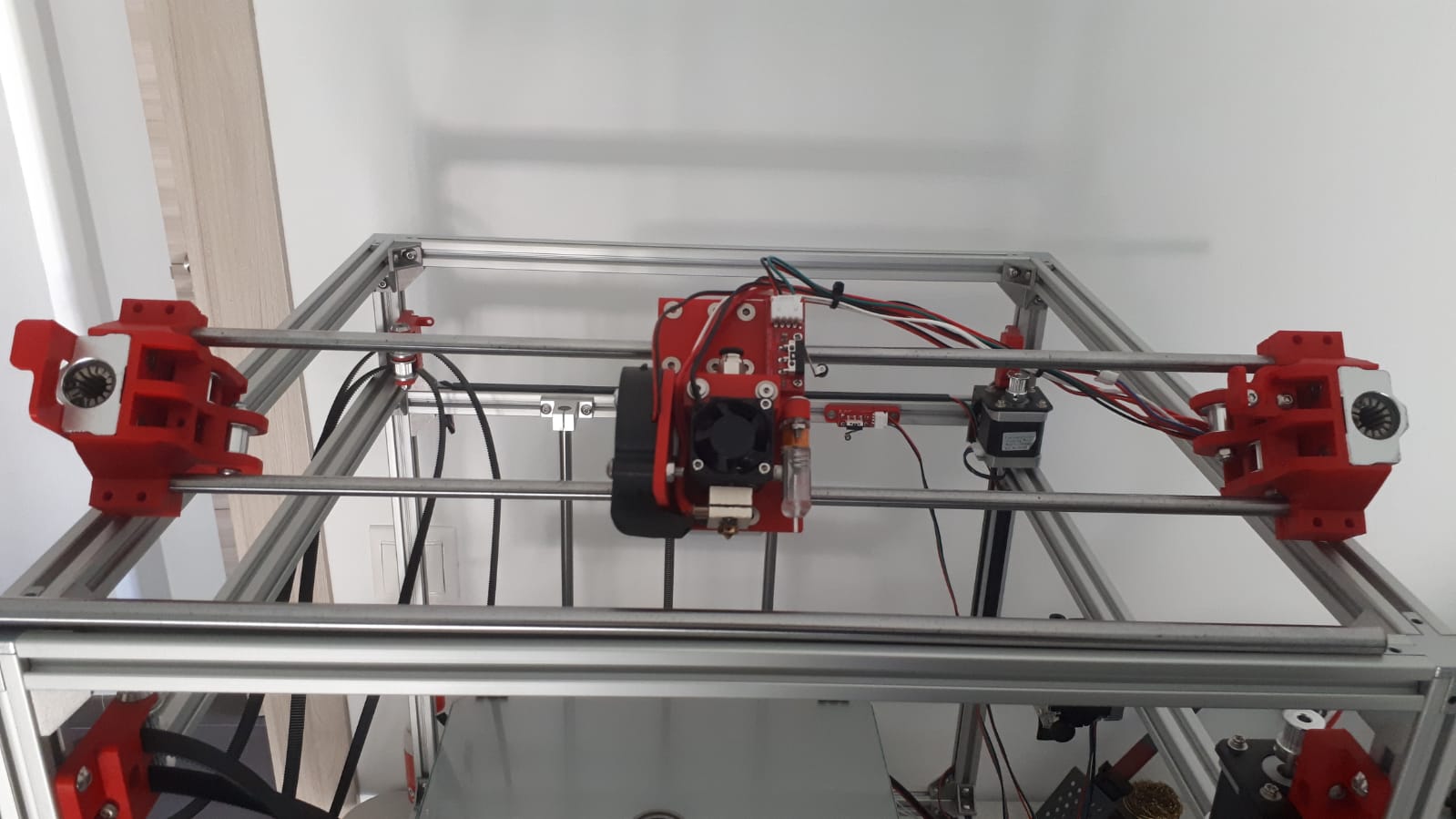
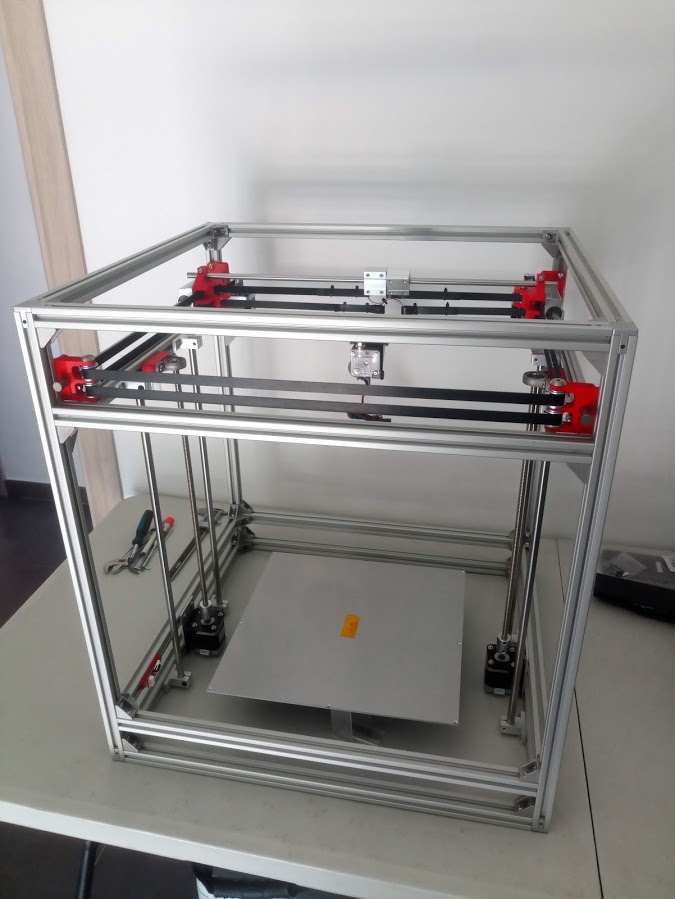
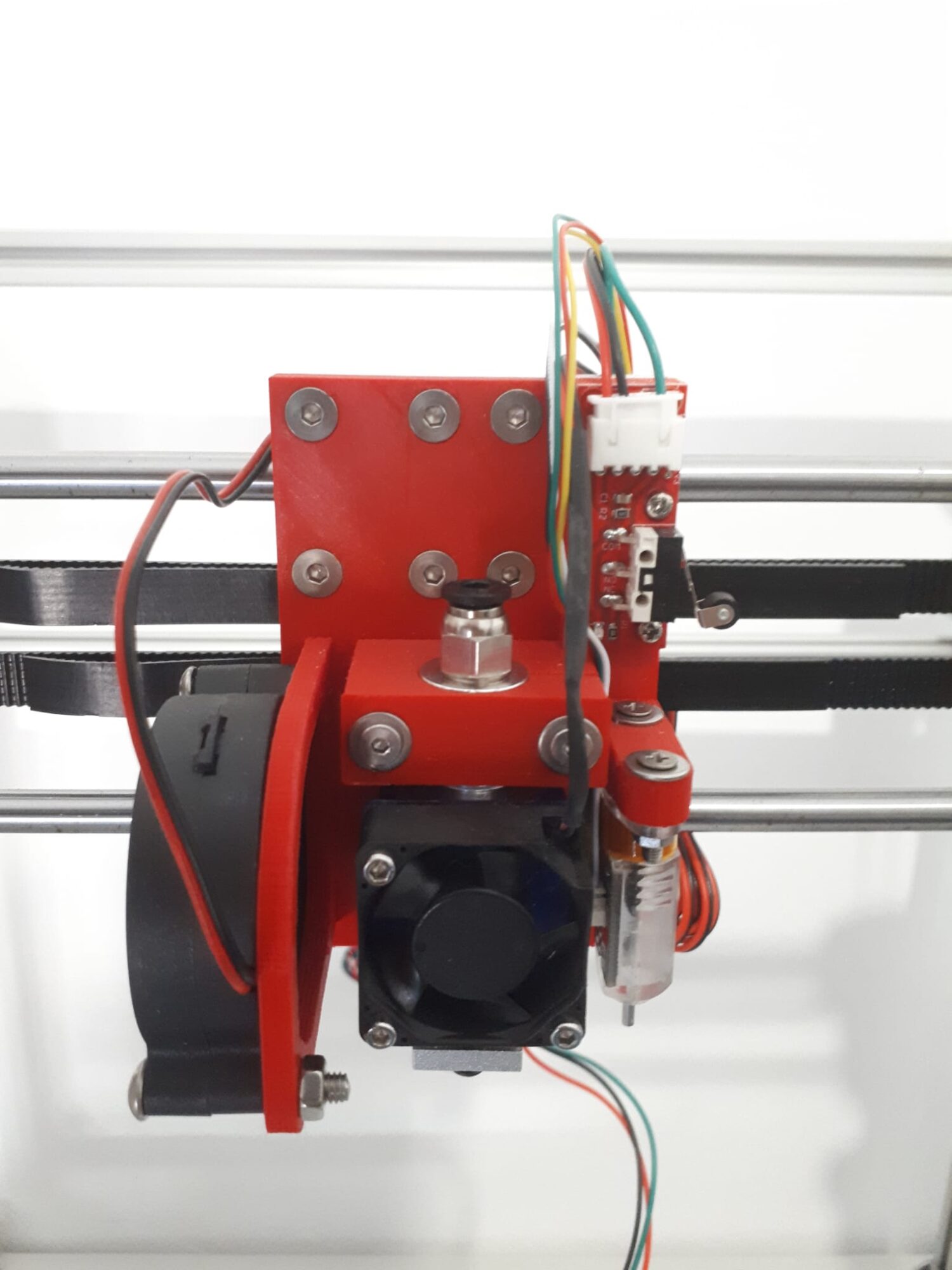
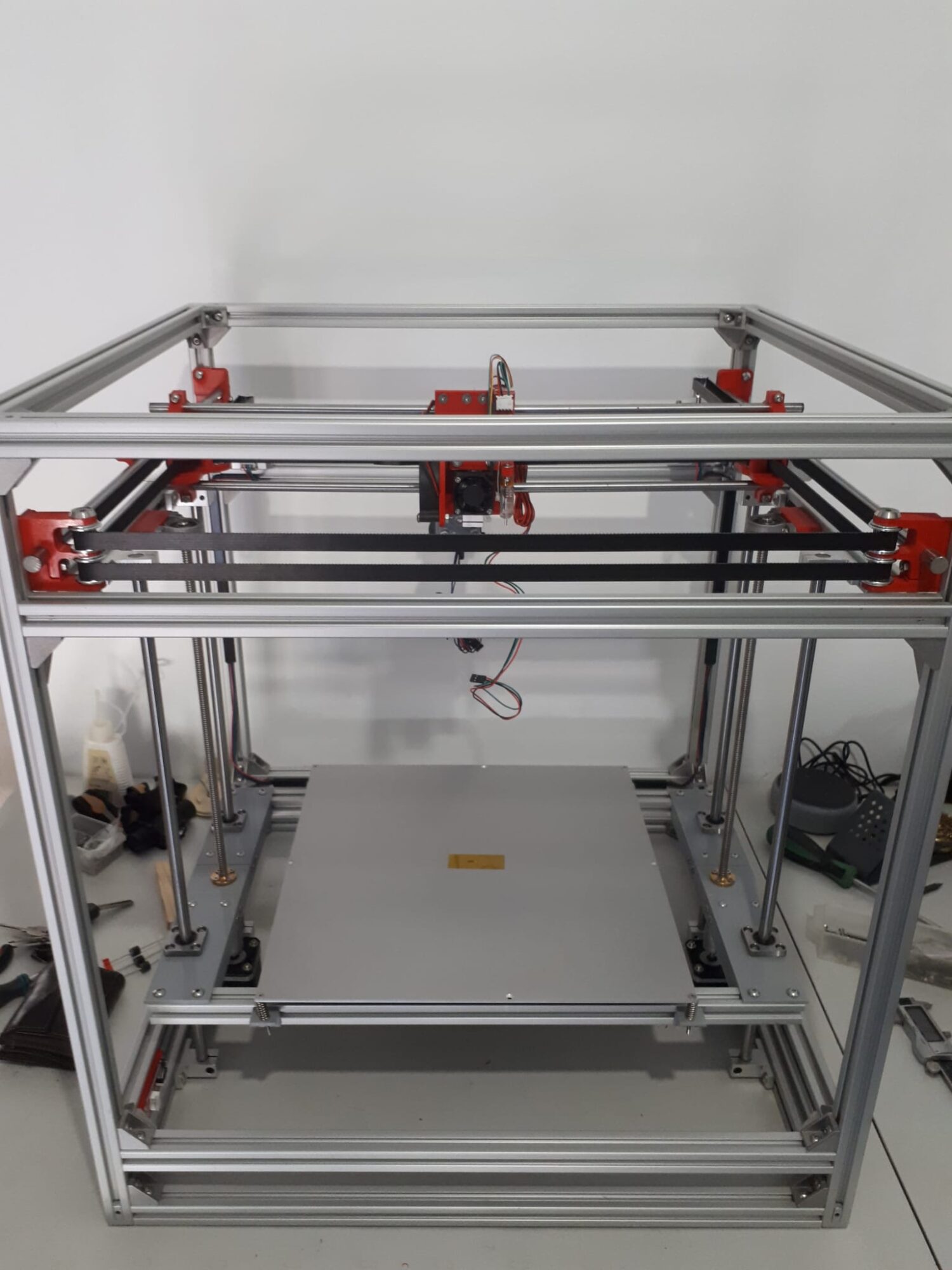
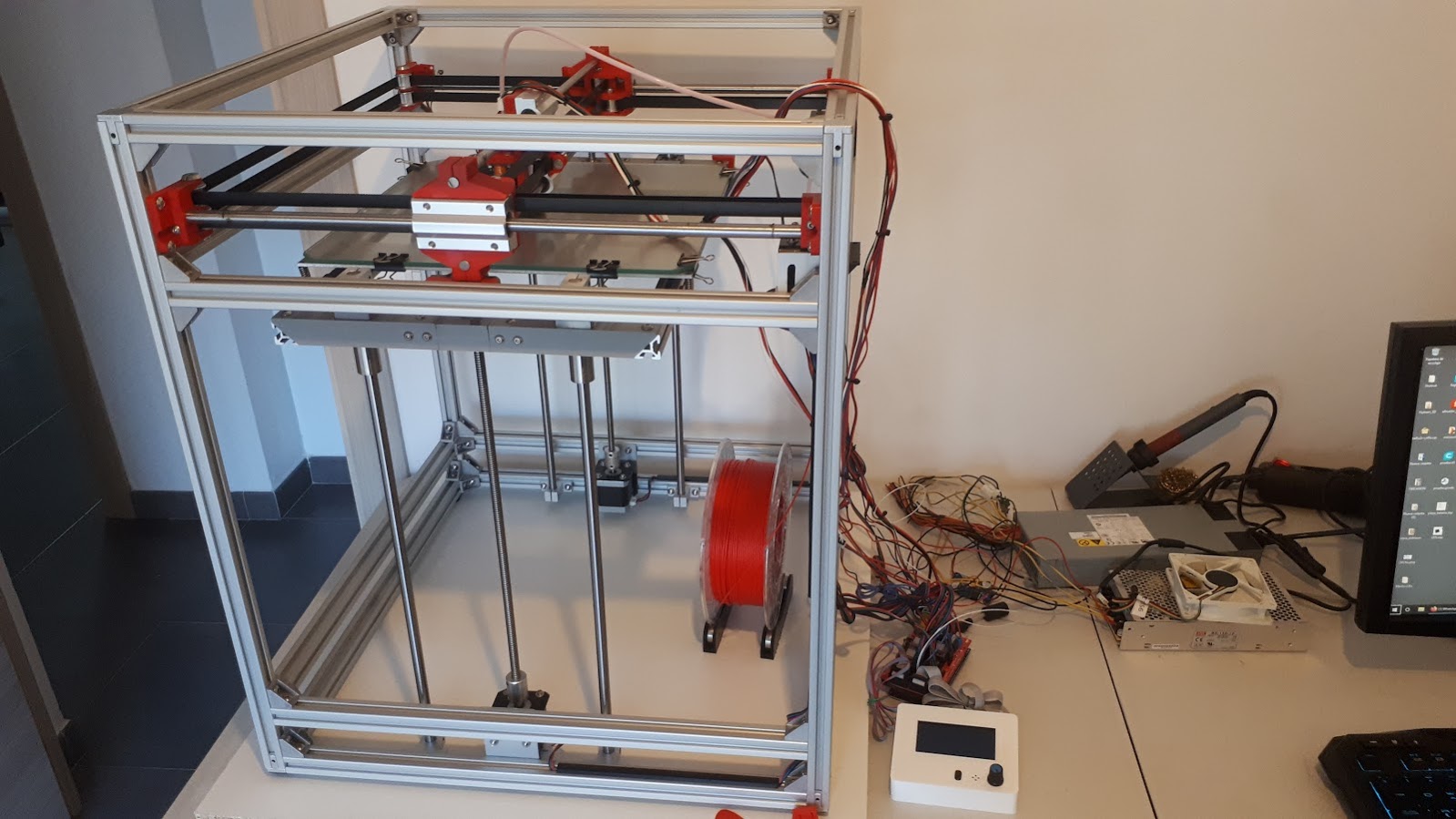
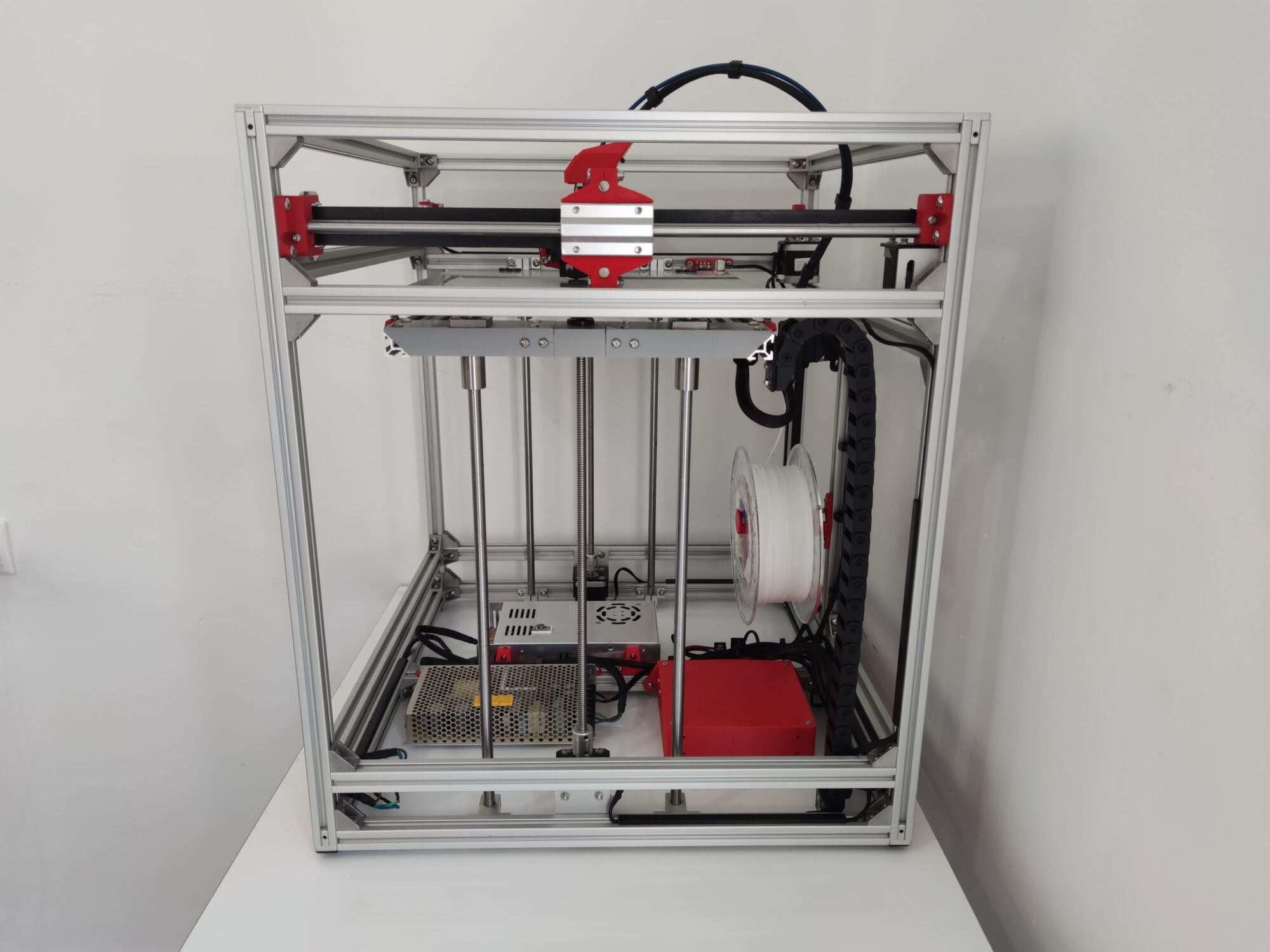
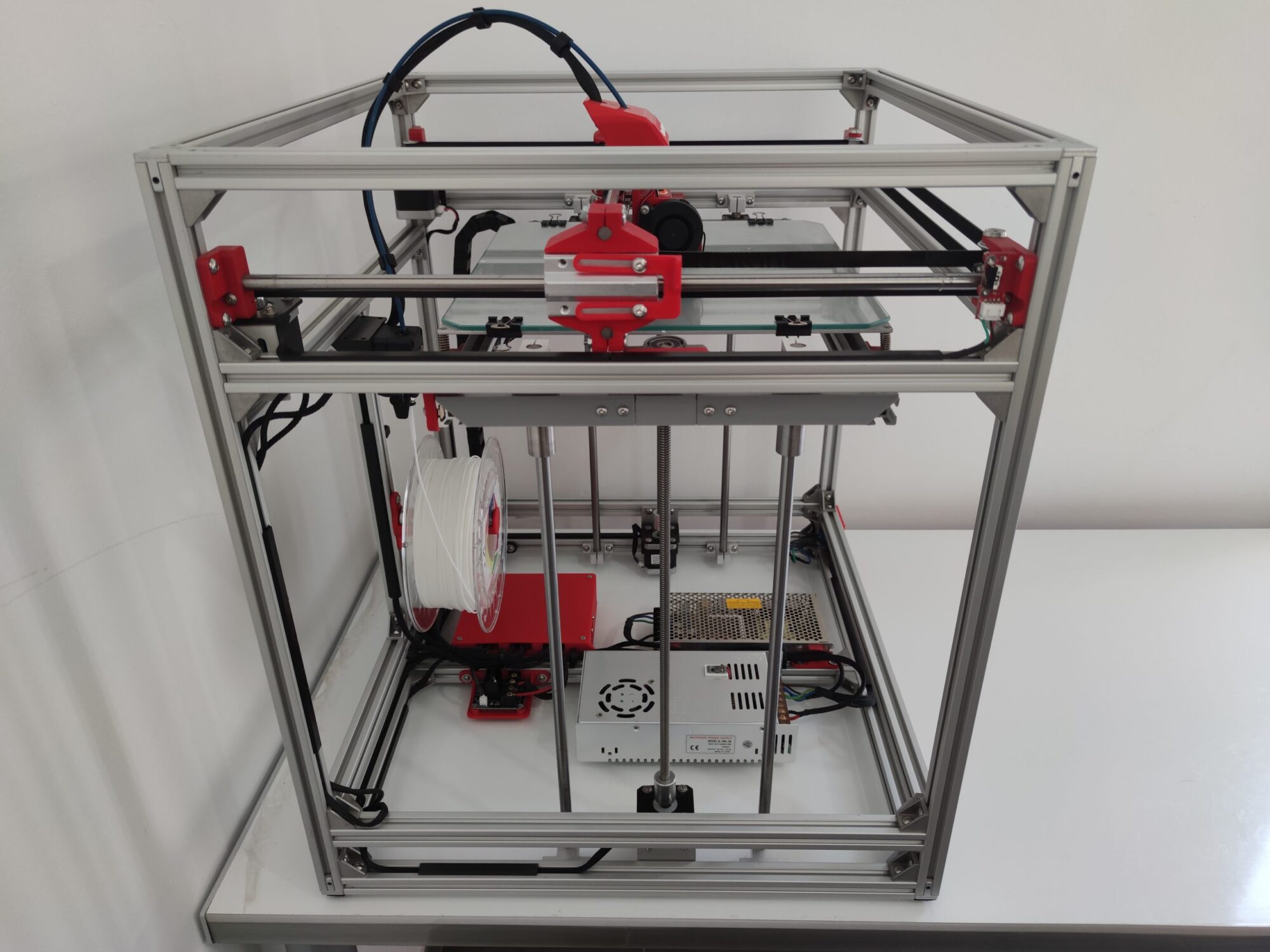
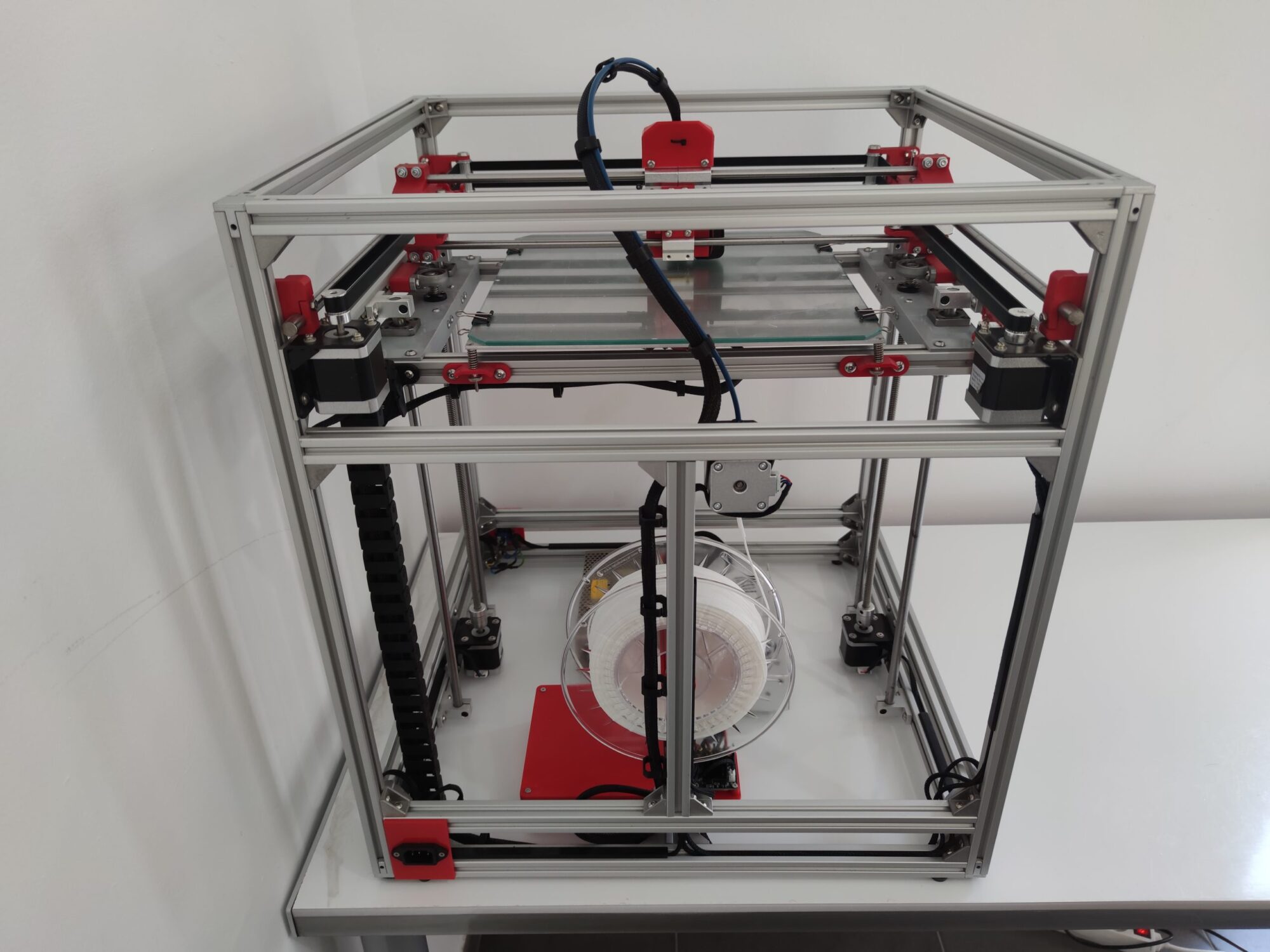
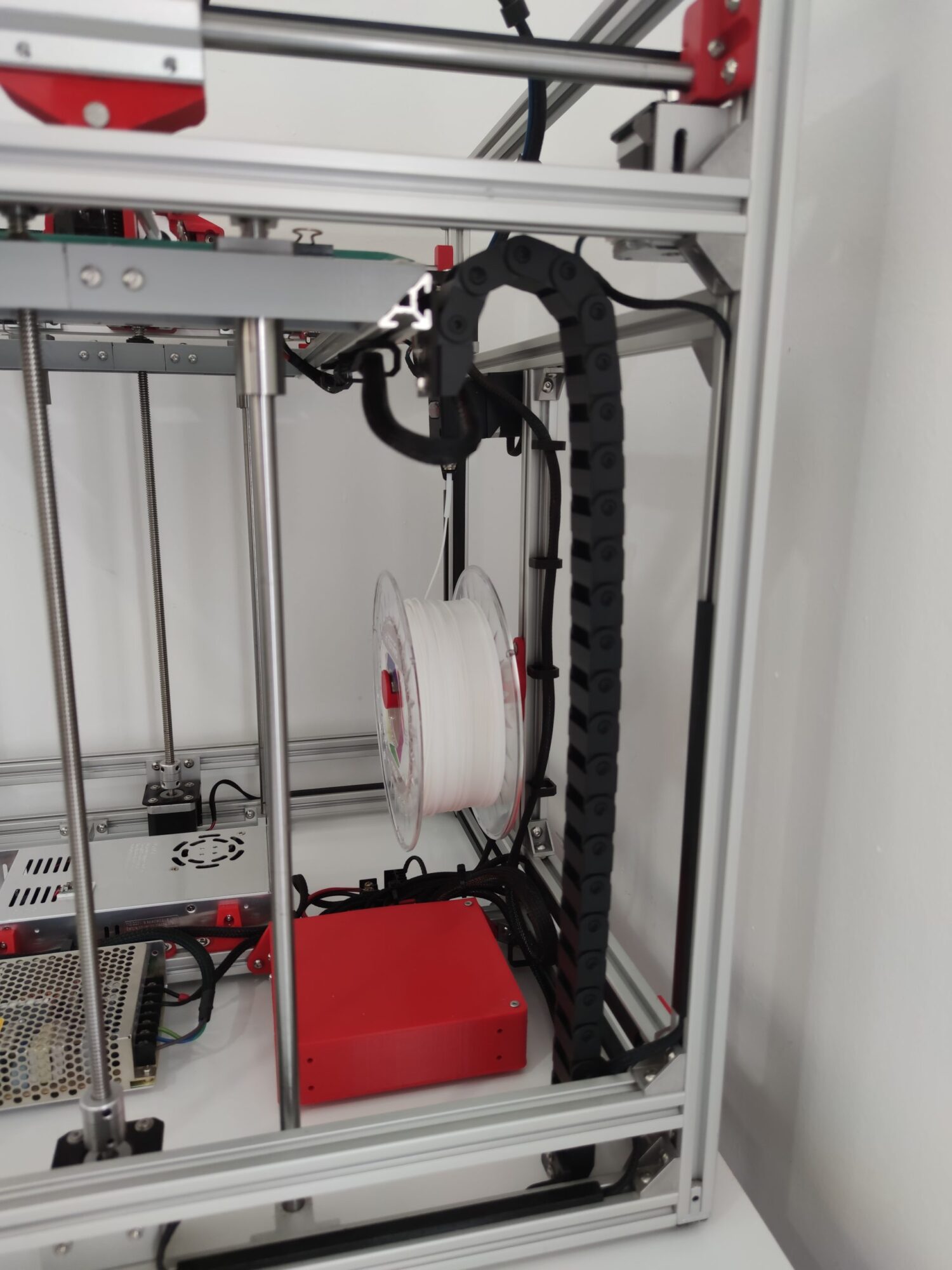
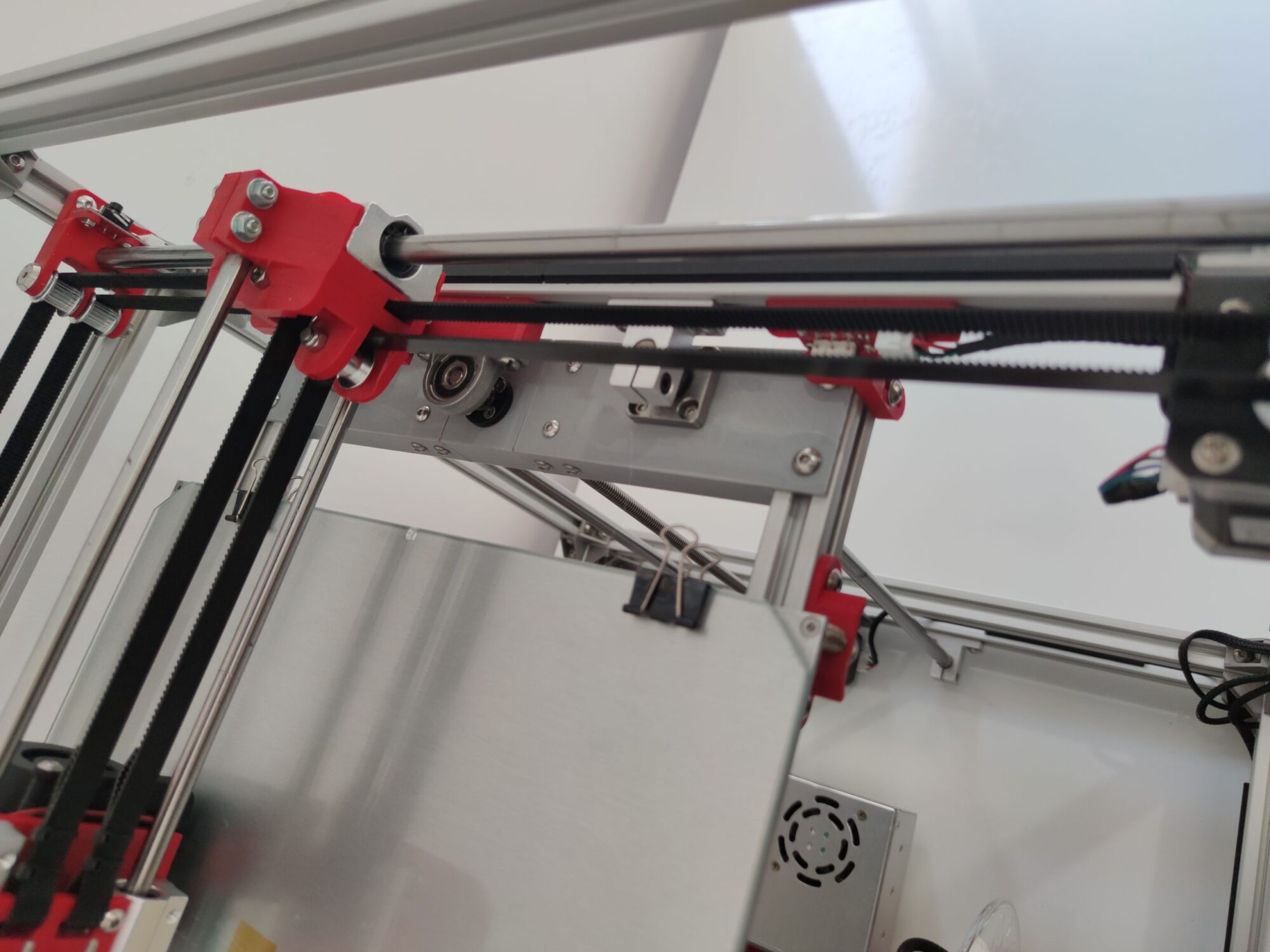
A modular frame in 20×20 mm aluminium extrusion with a 320 × 320 × 320 mm build volume, CoreXY motion on the X and Y axes and twin leadscrews on Z, Bondtech extrusion with a V6 hotend and Duet2 WiFi electronics with TMC2660 drivers. Every structural part designed and printed, and the wiring made to measure, protected with braided sleeving and hidden in the slots of the extrusion.
Main technical specifications
- Print volume: 320×320×320 mm
- Frame: 20×20 mm aluminium extrusion (overall dimensions: 550×520×600 mm)
- Motion system:
- X/Y axes: CoreXY with 8 mm smooth rods and linear bearings
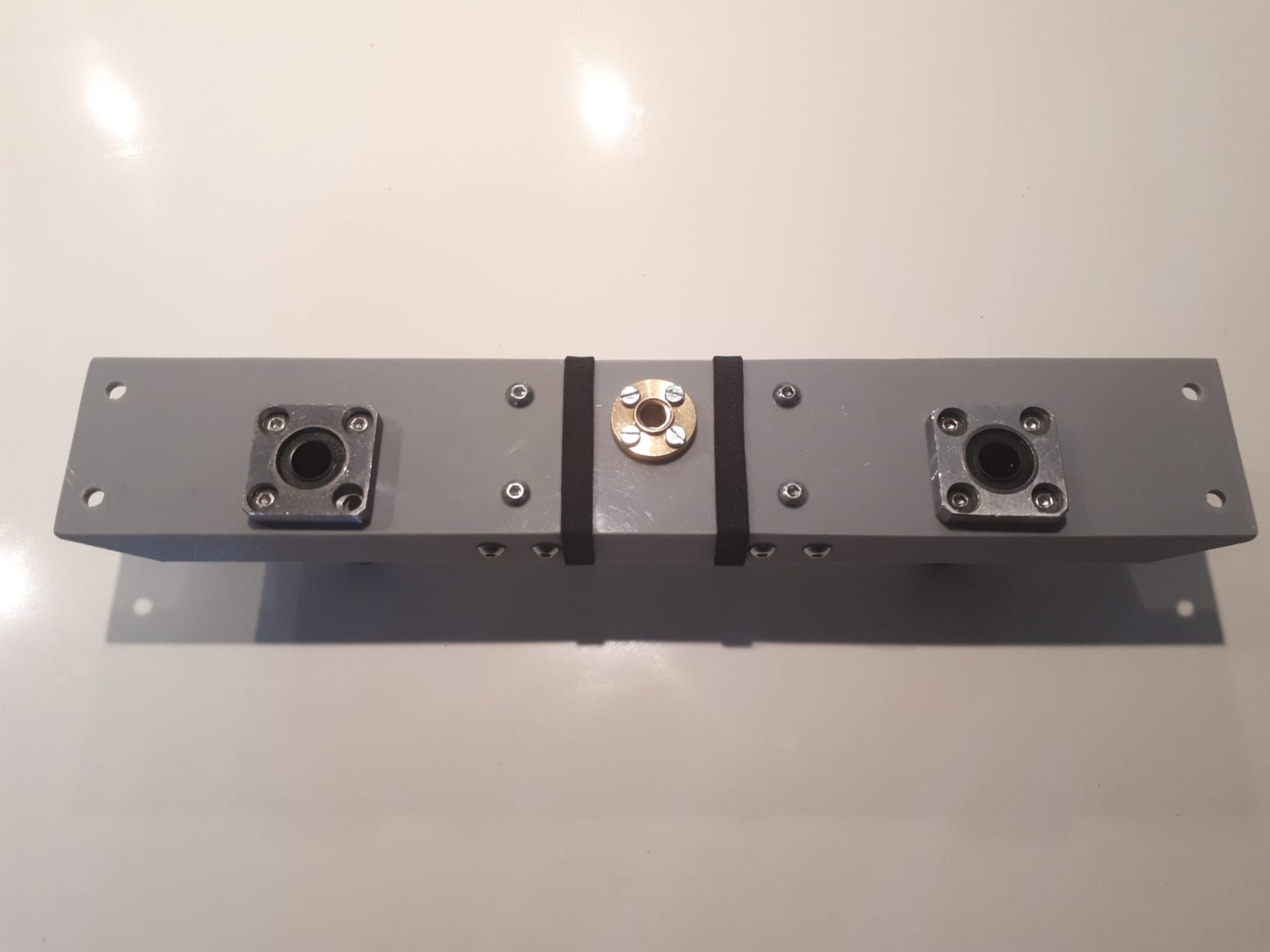
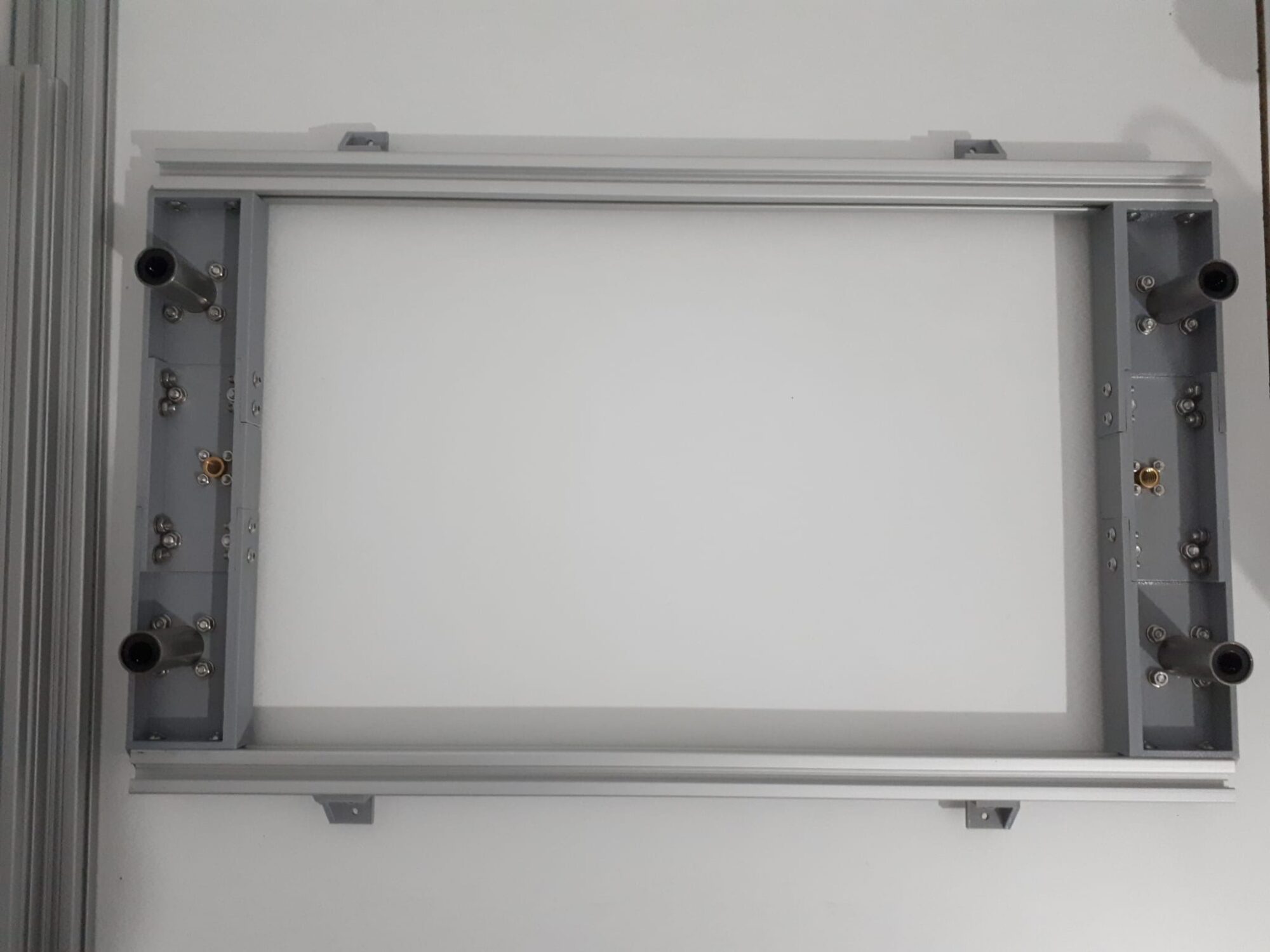
- Z axis: twin leadscrews of 2 mm pitch, 4 rods of 10 mm
- Extrusion:
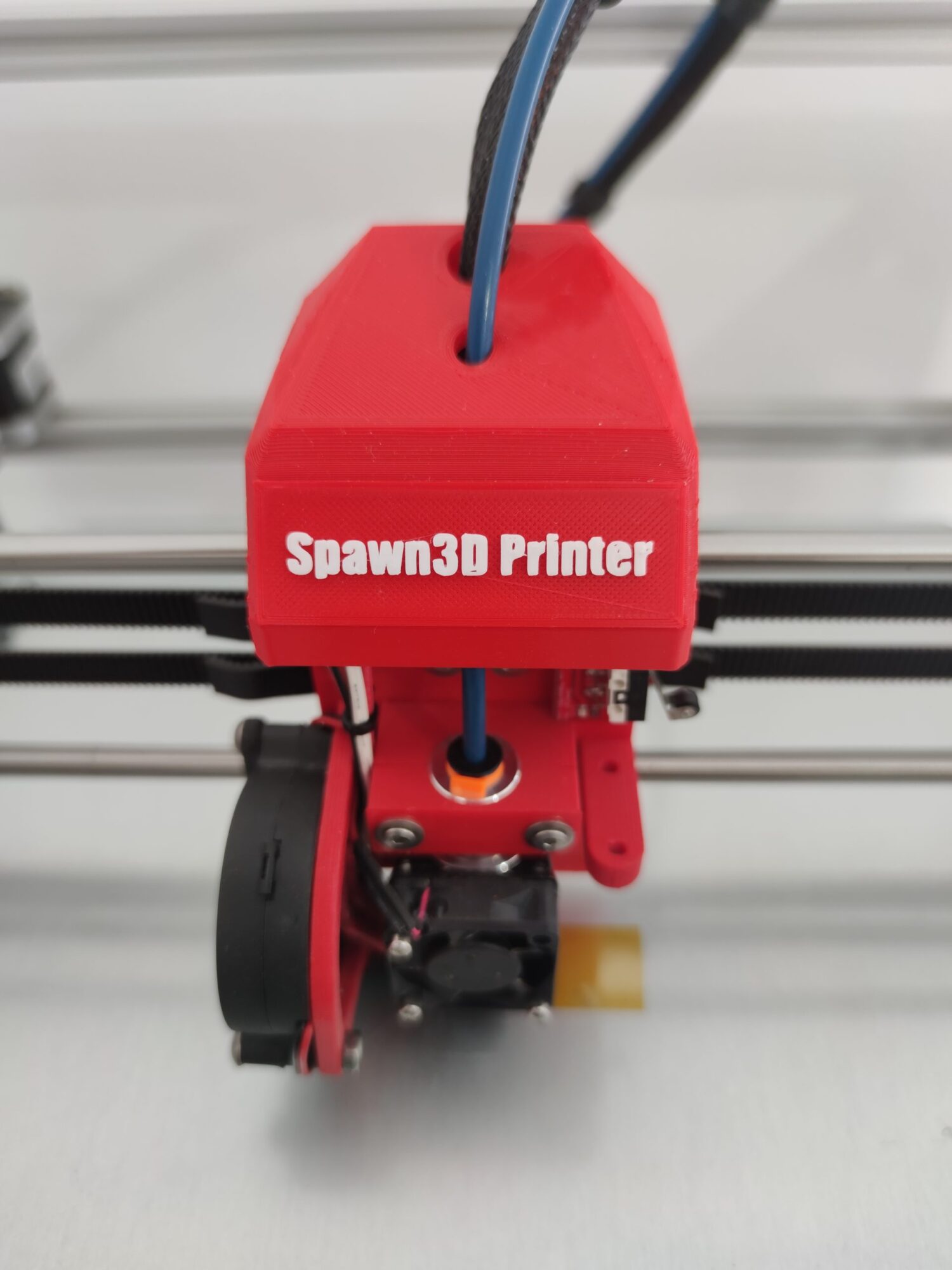
- Genuine Bondtech + Capricorn Bowden tube
- Hotend V6
- Electronics:
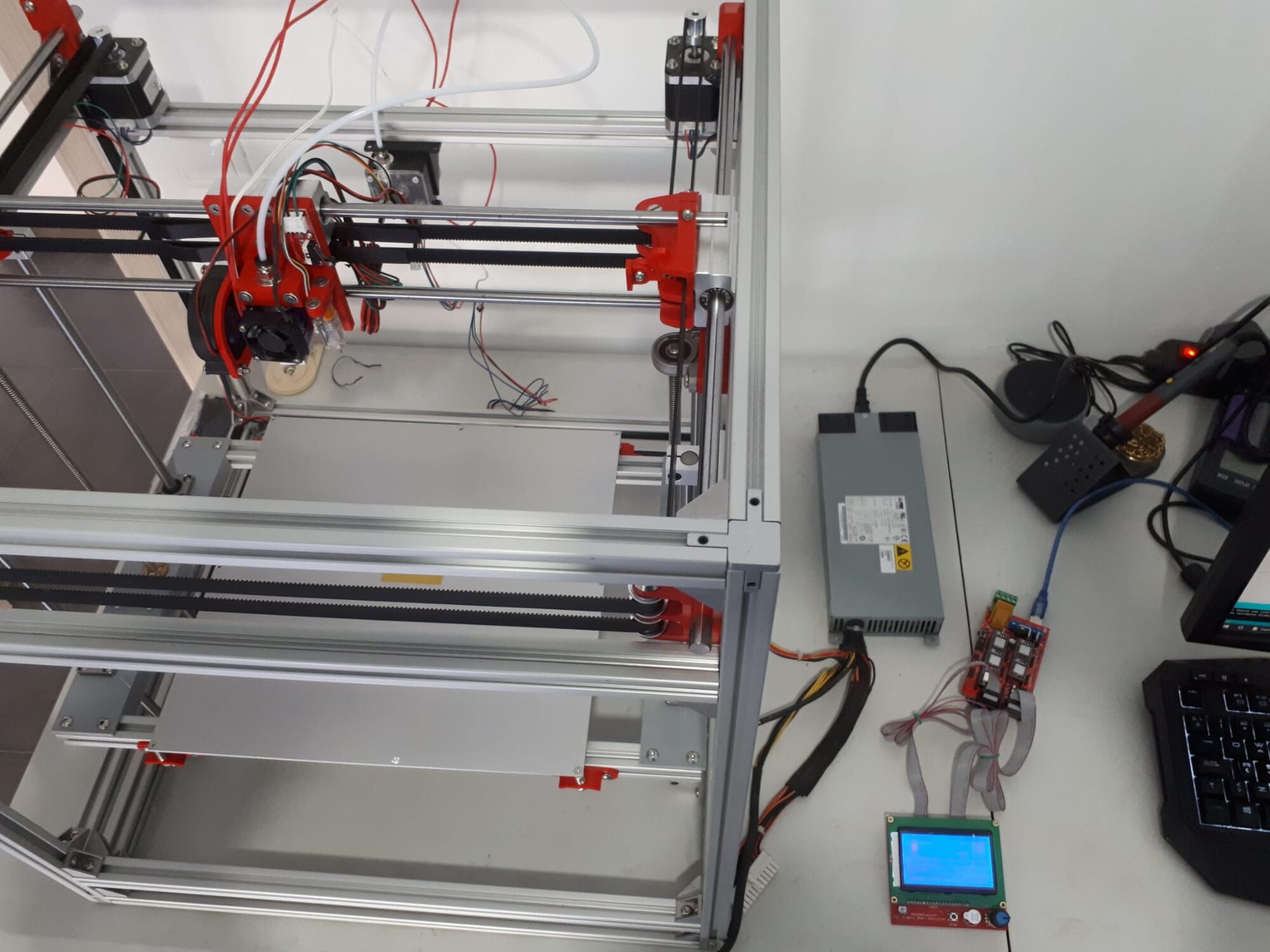
- Duet2 WiFi with TMC2660 drivers
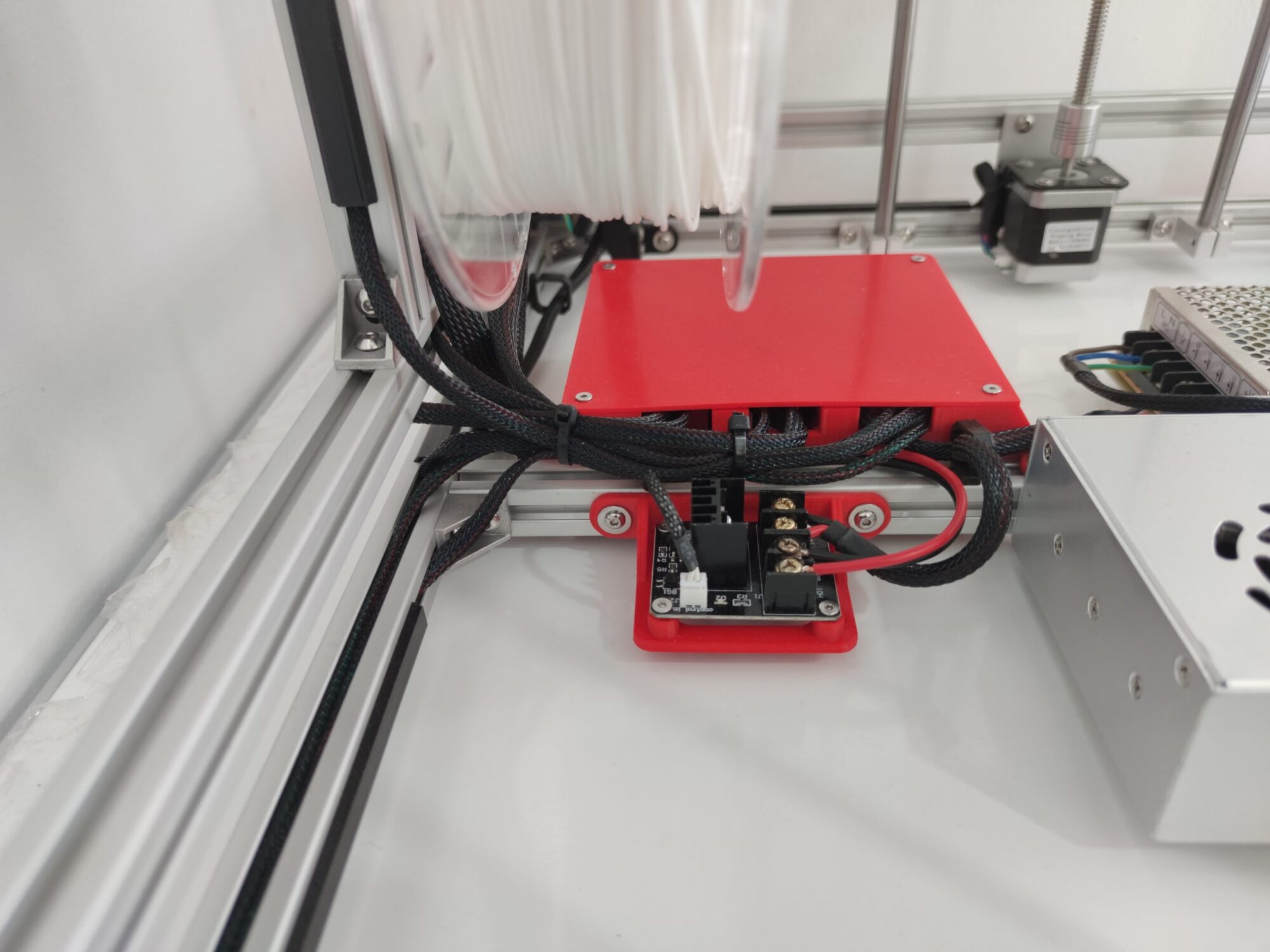
- External MOSFET for the heated bed
- Mechanical limit switches
- Power supply:
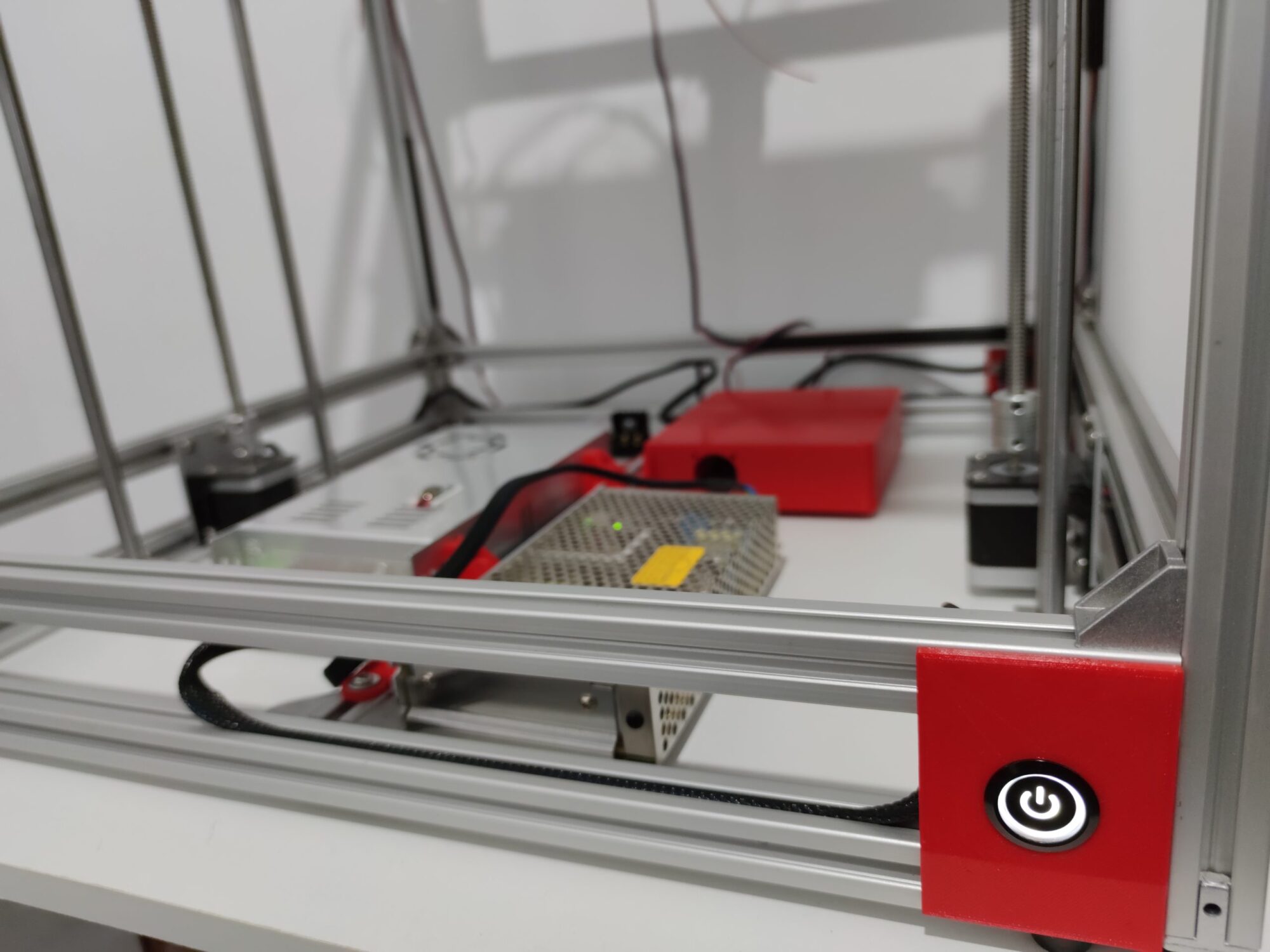
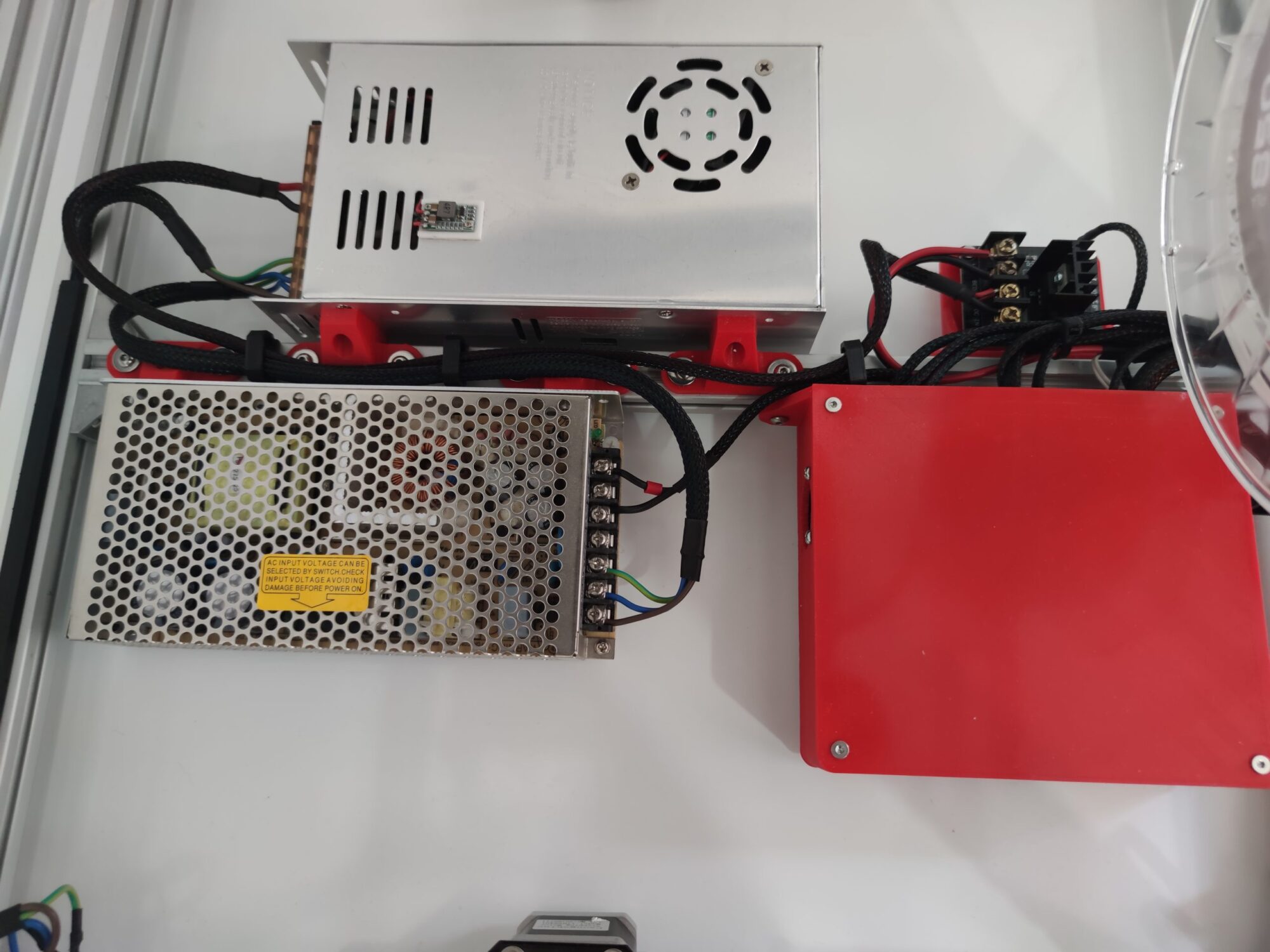
- Secondary 24 V supply dedicated to the bed
- Main 12 V supply for the remaining components
- Cooling:
- Blower fan for part cooling
- 3010 fan for the hotend
Design and build
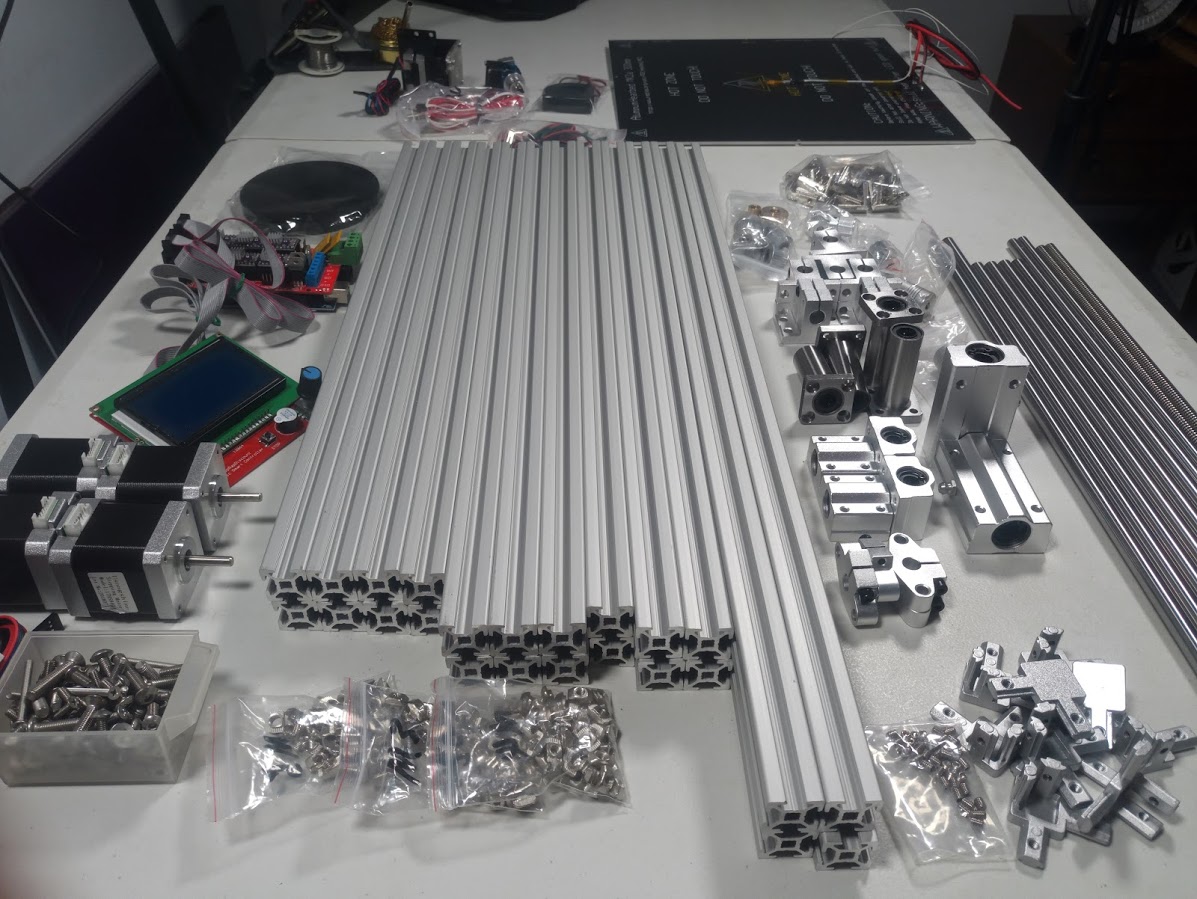
- Design and printing of every custom structural part.
- Custom wiring, protected with braided sleeving and heat-shrink, routed and hidden in the slots of the aluminium extrusion.
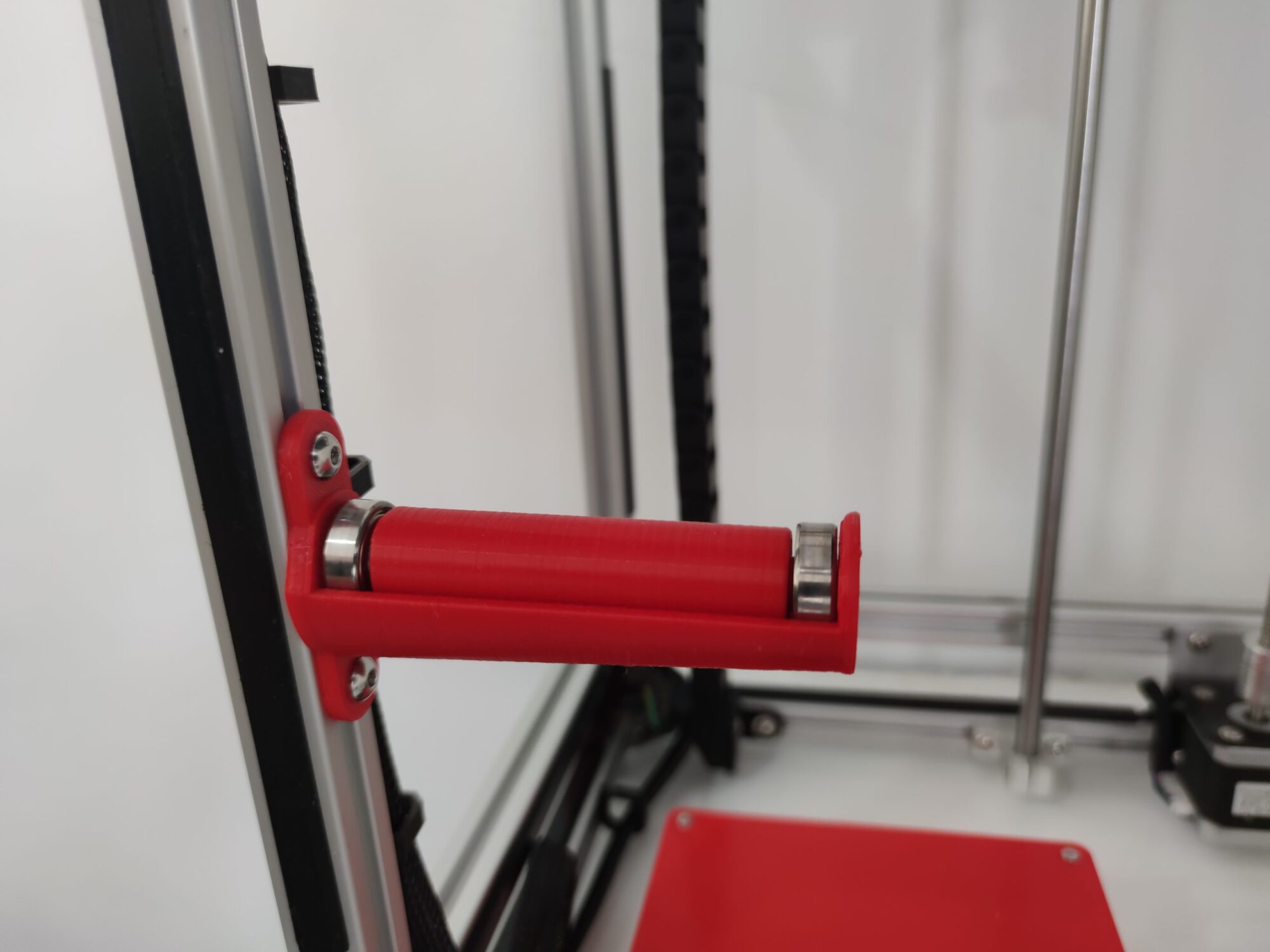
- Printed mounts for the electronics, the filament spool and the cooling.
- Marlin firmware installed in the early stage with Arduino + RAMPS, migrated to Duet2 WiFi in the final phase.
- Testing, calibration and firmware tuning (steps per mm, accelerations, PID, and so on).
Improvements made
- Migration from Arduino+RAMPS to Duet2 WiFi for greater precision, quieter running and a better interface.
- Extruder replaced with a more reliable one.
- Improved power supply system for faster heat-up times.
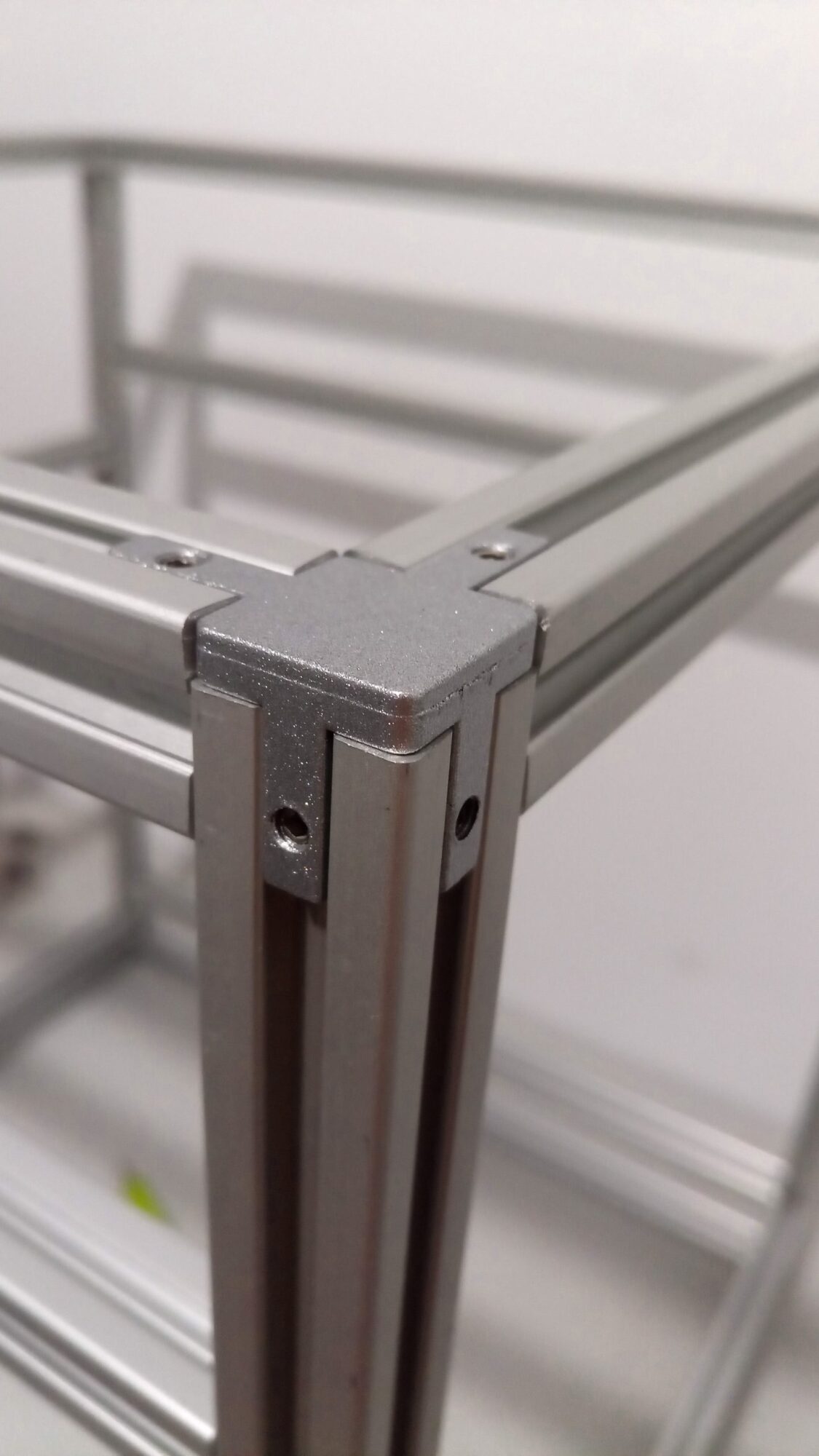
- Printed parts redesigned to make maintenance easier.
- Macros created to make loading and unloading filament easier.
Proposed future improvements
- Replace the bearings with linear rails to improve precision and stability.
- Consider enabling StallGuard on the drivers to do away with mechanical limit switches.
- Add an automatic levelling sensor to simplify bed calibration.
- Replace the fans with quieter models (Noctua).
- Standardise the power supply on 24 V.
- Replace the glass bed with a flexible magnetic plate.
- Fit a touchscreen to complement operation through the web interface.
- Fit covers over the lower part of the machine, where all the electronics are.
- Fit an enclosure with an access door around the rest of the machine to make printing technical materials easier.
- Fit LED lighting in the upper frame of the printer.
Click and drag to rotate the image.