PLA
The most dimensionally stable
Rigid and very precise, with a good surface finish. Easy to sand and paint.
When it suits Prototypes, models and indoor parts that will not be subjected to heat.
A range of materials, two technologies and no size limit. What decides whether a part works is usually not the machine, but having chosen the right material and the right orientation for what it will have to withstand.
These are the ones in most frequent use, not everything that can be printed. The material isn’t chosen out of habit but for what the part will have to withstand: the same design in PLA or in ASA behaves very differently depending on the conditions it works in.
The most dimensionally stable
Rigid and very precise, with a good surface finish. Easy to sand and paint.
When it suits Prototypes, models and indoor parts that will not be subjected to heat.
The workhorse
Strong and slightly flexible, it takes a knock without cracking. It withstands heat and humidity far better than PLA.
When it suits Most functional parts that will really be working.
For the outdoors
It resists sun and rain without yellowing or turning brittle over the years.
When it suits Anything mounted outdoors or in direct sun.
Flexible
Elastic: it deforms and returns to shape. How much it gives can be adjusted.
When it suits Gaskets, plugs, stops, guards and parts that absorb vibration.
The toughest
It stands up to rubbing and wear far better than the rest, and takes knocks without breaking. Its low friction means two parts working against each other do not eat into one another.
When it suits Gears, bushings, hinges and any part with elements that move or rub.
Translucent and smoothable
It lets light through evenly and takes a smoothing with isopropyl alcohol that removes the layers and adds clarity.
When it suits Diffusers, indicator lenses, fascias and parts with integrated lighting, or any part where the striping of the print would be a nuisance.
The list above is not a closed catalogue: we also work with special-finish filaments —wood effect, metallic, glow-in-the-dark— and with technical materials for particular requirements, from higher temperature resistance to chemical or abrasion resistance. If your part has a specific demand, put it to us: there is almost always a material that meets it, and if there isn’t, we’ll say so.
Covers most jobs: functional parts, enclosures, spares and prototypes, with every material above.
Infill, wall thickness and the orientation of the part are set according to the load it will take. That orientation is invisible in the result, but it is what decides where a part breaks if it is forced.
For small parts where detail is what matters and the layered finish of FDM falls short.
It gives smooth surfaces, clean edges and very fine geometry: presentation models, textured parts, precision fits and anything that will be looked at closely.
Not everything is solved by printing. When a part calls for another process —machining, sheet metal or injection moulding— it is approached the same way: the same design behind it and one party responsible for the result fitting.
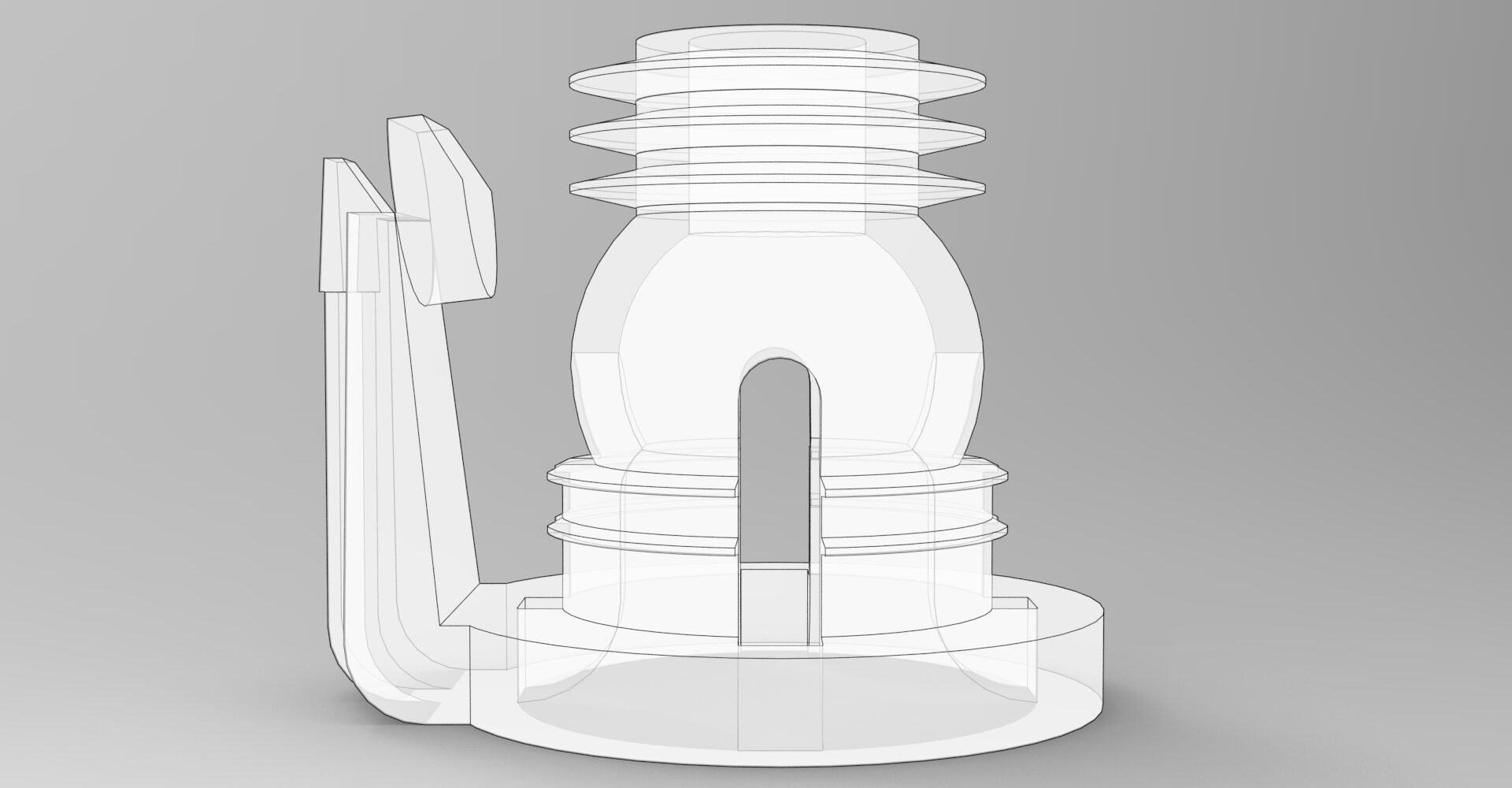
Size is not a barrier. A part that doesn’t fit whole in the machine is split into sections with joints designed for it: guided fits, overlaps or anchors assembled afterwards.
And it isn’t a workaround. Splitting often turns out better even when it isn’t necessary: it prints faster, each section can be oriented to hold up better where it needs to, and the finished part is transported and assembled without trouble.
We don’t advertise a standard lead time because there isn’t one: a part that is already modelled can be ready in a couple of days, and a design from scratch with validation can take a couple of weeks. Three things make the difference.
They depend on how complex the part is and on whether an original has to be measured to reproduce it.
It runs from a few hours to several days depending on size, material and level of detail.
On some parts it is immediate and on others —sanding, bonding, painting, inserts— it is half the work.
Every quote comes with a specific, committed date for that part. If it is urgent, say so from the start: sometimes the work can be reordered or the design simplified to make it.
Any of the three is enough to start. We will tell you whether it is feasible, which material it should be made in and how long it would take. A quote commits you to nothing.